 Save
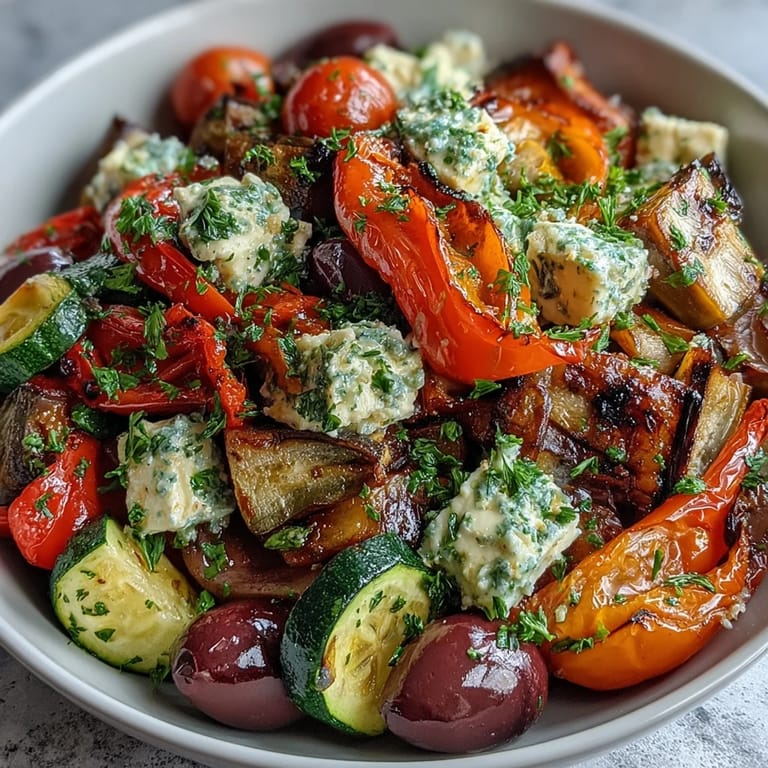
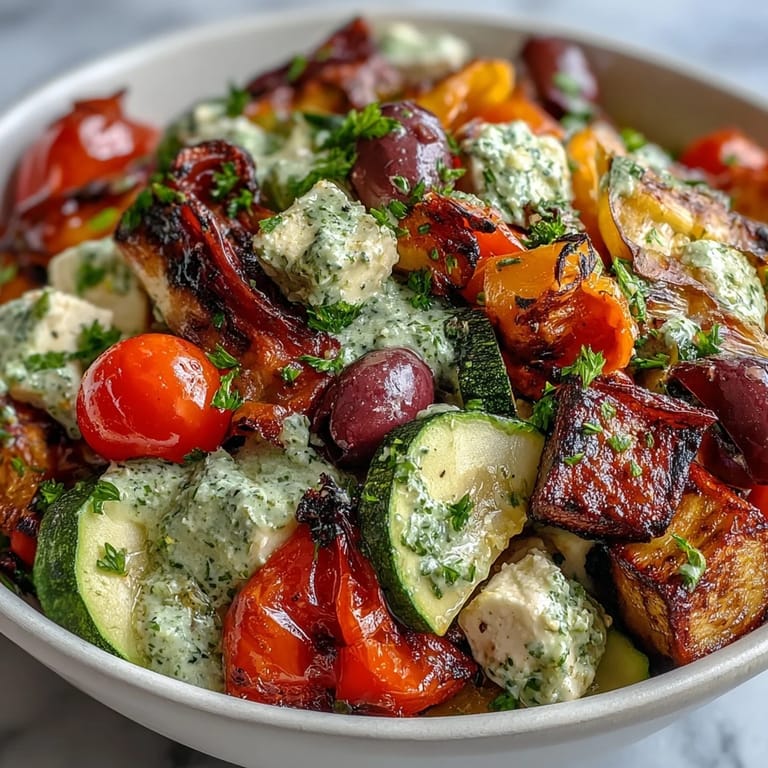
Save My neighbor Maria handed me a warm bowl of this roasted Greek salad one September evening, and I remember standing in my kitchen wondering why I'd never thought to roast these vegetables before. The warm feta melted slightly into the creases of the peppers, the olives had turned almost jammy from the heat, and everything tasted more intensely itself somehow. That one bowl completely rewired how I think about Greek salads—no more sad, cold lettuce, just vibrant vegetables that actually taste like something. She refused to give me her exact recipe, just smiled and said the secret was knowing when to stop fussing with it.
I made this last month for my sister's book club, and there was a moment of pure silence when everyone took their first bites—the good kind of silence. She asked if I could make it for her birthday potluck, and suddenly I understood why people get obsessed with recipes. It wasn't about showing off; it was about watching faces light up when something tastes this bright and unexpected.
Ingredients
- Red and yellow bell peppers: These form the backbone of the salad, turning soft and slightly sweet when roasted, so don't skip cutting them into generous 1-inch pieces.
- Red onion: Cut into wedges rather than thin slices so they stay intact and caramelize beautifully instead of turning to mush.
- Zucchini and eggplant: The eggplant absorbs all that olive oil and becomes silky; the zucchini balances it with a lighter texture, so both matter.
- Cherry tomatoes: Halve them so they roast quickly and concentrate their juices into something almost jammy.
- Extra-virgin olive oil: Use the good stuff for both roasting and the dressing—it's the main flavor player here.
- Kalamata olives: Pit them yourself if you can; the difference in flavor is worth those few extra minutes.
- Feta cheese: Cube or crumble it loosely so it mingles everywhere, not just sitting on top.
- Lemon juice and red wine vinegar: The acid keeps everything bright and prevents the warm salad from feeling heavy.
- Dried oregano: Don't use fresh here—dried oregano becomes more assertive when whisked into the dressing and tastes more authentically Greek.
- Fresh parsley: Add it at the very end so it stays green and doesn't get buried in warm vegetables.
Tired of Takeout? 🥡
Get 10 meals you can make faster than delivery arrives. Seriously.
One email. No spam. Unsubscribe anytime.
Instructions
- Heat your oven and prep your workspace:
- Set the oven to 220°C (425°F) and line a baking sheet with parchment paper so you're not stressing about cleanup later. This temperature roasts vegetables quickly without turning them to charcoal.
- Arrange and season the vegetables:
- Toss your prepped peppers, onion, zucchini, eggplant, and tomatoes on the baking sheet, drizzle with olive oil, then season generously with salt and pepper. Make sure everything gets coated evenly so nothing dries out.
- Roast until caramelized:
- Slide the pan into the oven for 25–30 minutes, stirring halfway through so the bottom vegetables don't stick and the top ones get color. You're looking for soft interiors and lightly browned edges—that's where the flavor hides.
- Make the dressing while vegetables roast:
- Whisk together olive oil, red wine vinegar, lemon juice, oregano, Dijon mustard, and grated garlic until everything looks emulsified and glossy. Taste it and adjust the salt and pepper until it feels bright enough to wake up the warm vegetables.
- Build the salad on a serving platter:
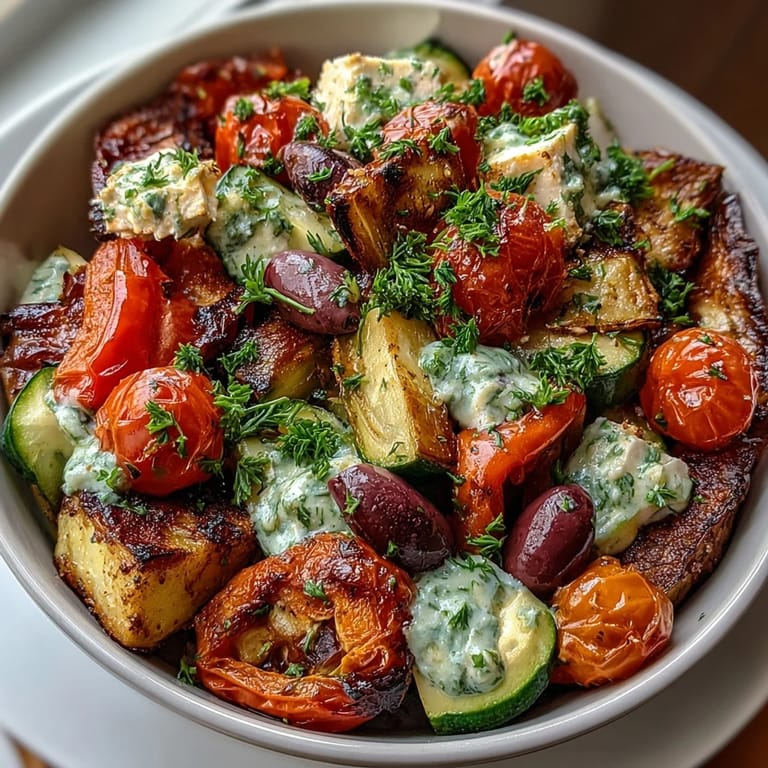
- Lay down cucumber slices first so they stay slightly cool and crisp, then pile the warm roasted vegetables on top. Scatter olives and feta everywhere, not just the edges, so every bite has something interesting in it.
- Dress and garnish:
- Drizzle the dressing over everything while the vegetables are still warm so they absorb the flavors, then finish with a handful of chopped parsley. Serve it warm or let it come to room temperature—it's good both ways, which is why this salad lives on my rotation year-round.
 Save
Save There's something almost magical about how roasting transforms vegetables from side-dish territory into something people want seconds of. My daughter, who normally picks at salads, asked for this three times in one week, and I realized it's not about tricking kids into eating vegetables—it's about making them taste good enough that nobody feels like they're settling.
When to Roast Vegetables Ahead
I've roasted the vegetables the morning of, let them cool to room temperature, and assembled the salad right before dinner with complete success. If you're meal-prepping, roast everything but wait to add the dressing and fresh parsley until you're actually serving—that way the vegetables don't get soggy sitting in vinaigrette for days. The whole thing actually tastes better if the vegetables have time to cool slightly and reabsorb some of their juices, so there's no rush to eat it immediately hot.
Variations That Actually Work
Sometimes I add a handful of capers or sun-dried tomatoes if I have them around, and the briny, funky flavor plays beautifully against the sweetness of the roasted vegetables. Mushrooms can absolutely swap in for eggplant if you're not an eggplant person—they get even more tender and meaty when roasted. For a heartier version that goes from side to main course, I'll add roasted potatoes or chickpeas, and suddenly it becomes the kind of salad you can eat for dinner instead of serving alongside something else.
Pairing and Serving Suggestions
Warm pita bread torn into pieces for scooping feels natural here, or crispy bread rubbed with garlic if you're being a little fancier about it. A dry white wine like Assyrtiko or Pinot Grigio cuts through the richness of the feta and the oil without overpowering the delicate vegetables. I've served this as a side to grilled fish, as a vegetarian main course with crusty bread, and even cold for lunch the next day—it's that adaptable.
- If you're cooking this ahead, store the roasted vegetables and dressing separately so nothing gets soggy.
- Taste the dressing before you pour it on; if it needs more punch, add another squeeze of lemon juice rather than more salt.
- This is one of those recipes where quality ingredients actually matter, especially the olive oil and feta, so don't default to whatever's cheapest.
 Save
Save This salad sits in my mental file right next to comfort foods and dinner-party solutions, because it's one of those rare recipes that feels both special and approachable. Every time I make it, someone asks for the recipe, which never gets old.
Recipe FAQs
- → Can I make this ahead of time?
Yes, you can roast the vegetables up to 2 days in advance and store them in the refrigerator. Bring them to room temperature before assembling with the fresh ingredients and dressing.
- → What vegetables work best for roasting?
Bell peppers, red onion, zucchini, eggplant, and cherry tomatoes are excellent choices. They hold their shape well and develop natural sweetness when roasted at high heat.
- → Is this served warm or cold?
This dish is best served warm or at room temperature, which allows the roasted flavors to shine while keeping the fresh vegetables crisp and refreshing.
- → Can I substitute the feta cheese?
You can use halloumi, goat cheese, or a vegan feta alternative. Each will provide a different texture and flavor profile while maintaining the salty, creamy element.
- → How long will leftovers keep?
Store leftovers in an airtight container for up to 3 days. The vegetables will soften over time, but the flavors will continue to develop and meld together.