 Save
Save There's something about October that makes me crave butternut squash soup—not because of any grand tradition, but because my neighbor showed up one rainy afternoon with half a squash she couldn't use, and I had to figure out what to do with it. That first batch was rough, watery and bland, but something clicked when I roasted everything instead of boiling it. The kitchen filled with this caramel-like sweetness I hadn't expected, and suddenly I understood why this soup keeps showing up on my stove every fall.
I made this for my partner during their first week of a new job, when they came home completely drained and just needed something warm and uncomplicated. They had a bowl, then another, and we didn't say much—just sat quietly while this soup did what good food is supposed to do. It became our quiet ritual that season, a way of saying everything was going to be okay.
Ingredients
- 1 large butternut squash (about 2 lbs), peeled, seeded, and cubed: The star of the show—don't skip the roasting because that's where the magic happens, transforming it from bland to caramel-sweet.
- 1 medium yellow onion, chopped: Adds body and sweetness when roasted; don't rush chopping it small because you want those pieces to caramelize properly.
- 2 garlic cloves, peeled: Leave them whole during roasting so they soften completely and mellow out without turning bitter.
- 1 medium carrot, peeled and chopped: Brings subtle earthiness and helps balance the squash's sweetness with gentle vegetable depth.
- 4 cups vegetable broth (gluten-free, if needed): The liquid foundation—use broth you actually enjoy tasting because it matters more than you'd think in a soup this simple.
- 2 tbsp olive oil: Essential for coating vegetables before roasting; this is what creates those caramelized edges.
- 1 tsp salt: Start here and taste as you go; soup flavors shift once you blend.
- 1/2 tsp black pepper: Freshly cracked if you have a grinder, which brightens the whole bowl.
- 1/2 tsp ground nutmeg: The secret that makes people ask what that warmth is in their spoon.
- 1/4 tsp cayenne pepper (optional): Just a whisper if you want to wake it up without making it spicy.
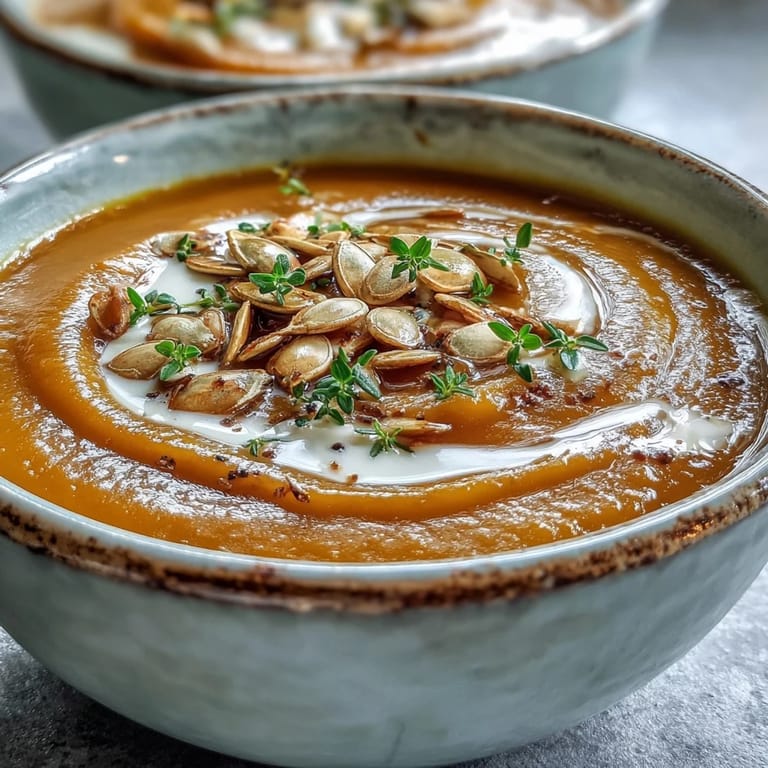
- 1/4 cup heavy cream or coconut cream (optional): Swirl it in at the end for silkiness, or skip it entirely if you prefer the soup lean and honest.
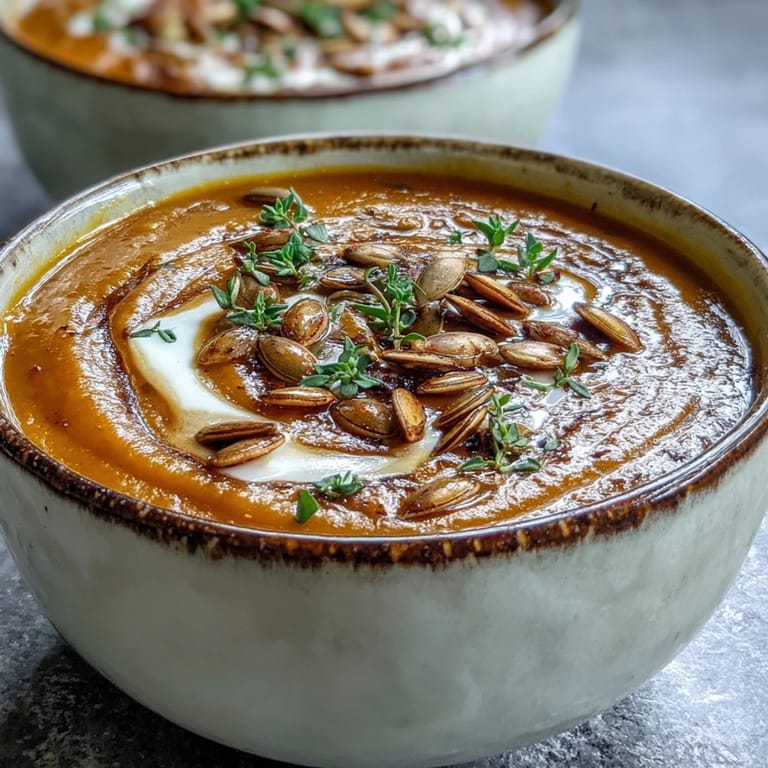
- Toasted pumpkin seeds (optional): Adds crunch and a hint of nuttiness that contrasts beautifully with velvet.
- Fresh thyme (optional): A small garnish that somehow makes everything taste more intentional.
Tired of Takeout? 🥡
Get 10 meals you can make faster than delivery arrives. Seriously.
One email. No spam. Unsubscribe anytime.
Instructions
- Get your oven ready and prep everything:
- Preheat to 400°F while you cube the squash and chop your vegetables—this is where mise en place actually saves you time and stress.
- Get those vegetables on the sheet pan:
- Arrange cubed squash, onion, garlic, and carrot on a baking sheet, drizzle generously with olive oil, and toss until everything glistens. This coating is what turns ordinary vegetables into something golden and sweet.
- Let the oven do the work:
- Roast for 30 to 35 minutes, stirring halfway through—you'll know it's ready when the edges are caramelized and a fork goes through the squash easily. The smell alone will tell you something good is happening.
- Build your soup base:
- Transfer roasted vegetables to a large pot and add vegetable broth, salt, pepper, nutmeg, and cayenne if you're using it. The roasted vegetables will have already started breaking down, so the broth will taste rich even before you blend.
- Simmer to meld the flavors:
- Bring everything to a gentle simmer over medium heat for about 10 minutes—this isn't rushed; it's when all those sweet roasted notes actually start talking to each other.
- Blend until it's completely smooth:
- Use an immersion blender right in the pot (much easier than the countertop version), moving it slowly and letting it do the work. If you're using a regular blender, work in batches and be careful with hot liquid—never fill it more than halfway.
- Taste and adjust:
- This is the moment you own it—add more salt, a pinch more nutmeg, or a touch more cayenne depending on what you taste. Don't be shy here; underseasoned soup is sad soup.
- Make it rich if you want:
- Stir in heavy cream or coconut cream if you're going that direction, but honestly, the soup is complete without it. Some days you want velvet, some days you want clarity.
- Serve with intention:
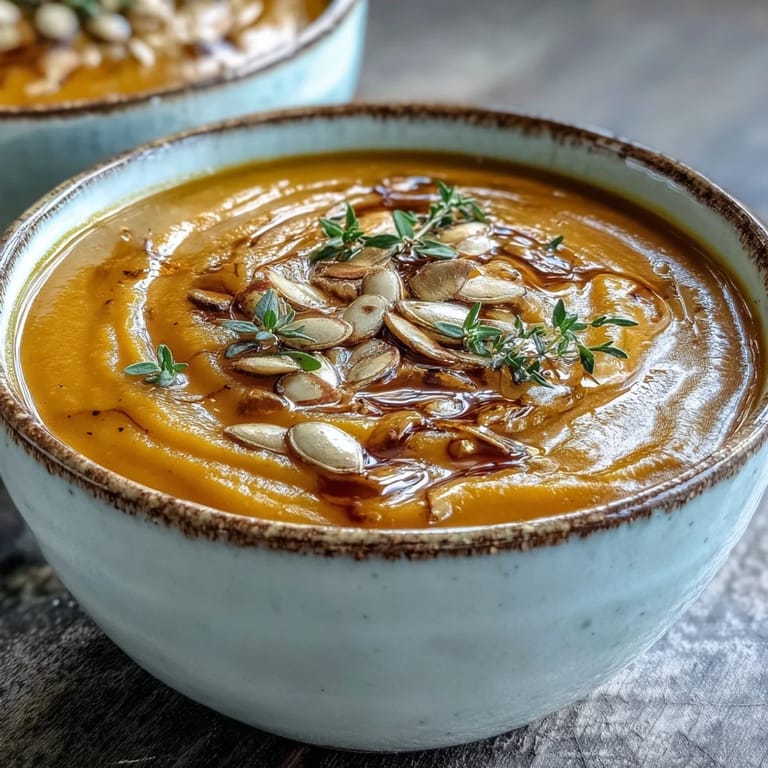
- Pour into bowls while it's still hot, add a small handful of toasted pumpkin seeds for crunch, and lay a few thyme leaves on top if you have them. Even small details make this feel special.
 Save
Save A friend visited from out of state and I made this soup almost without thinking—it had become part of my default comfort repertoire. She took one spoonful and her eyes closed, and that small moment reminded me that the best recipes aren't complicated, they're just honest. Sometimes the most meaningful things we cook are the ones we stop overthinking.
Why Roasting Changes Everything
The difference between roasted and boiled squash is the difference between a song and sheet music—both are technically the same thing, but one has warmth and character. When you roast, the natural sugars caramelize and concentrate, creating depth that no amount of seasoning can manufacture later. I learned this through trial and error, and now I roast almost every vegetable I'm unsure about.
The Blending Question
There's a real debate between immersion blenders and countertop versions, and honestly, both work—but immersion blenders mean less cleanup and less risk of spilling hot soup everywhere, which matters when you're tired. If you go the countertop route, let the soup cool slightly and work in batches; patience here prevents burns and mess. The texture either way should be completely smooth, like satin moving in the bowl.
How to Make It Yours
This recipe is a foundation, not a prison—I've added a sliced apple for subtle sweetness, swapped half the broth for apple cider, and even stirred in a tablespoon of miso paste once when I wanted more umami. The nutmeg is adjustable depending on how much warmth you want, and the cayenne is really just there if you want a gentle wake-up call at the end of each spoonful. Treat this soup like you're learning its language rather than following orders.
- Add a small apple to the roasting tray if you want whisper-soft sweetness without it being obvious.
- Coconut cream works beautifully if you're avoiding dairy, and it brings a completely different but equally delicious richness.
- Leftover soup keeps for three days in the fridge and actually tastes better as the flavors settle and deepen.
 Save
Save This soup reminds me why simple cooking matters—it's the kind of food that wraps around you like something kind happened. Make it when you need comfort, when you're experimenting with flavors, or when you just want your kitchen to smell like home.
Recipe FAQs
- → Can I make this soup ahead of time?
Yes, this soup stores beautifully in the refrigerator for up to 5 days or freezes for up to 3 months. Reheat gently on the stovetop, adding a splash of broth if needed to adjust consistency.
- → How do I make this soup vegan?
Simply substitute coconut cream for heavy cream, or omit the cream entirely. Ensure your vegetable broth is vegan-friendly, and the soup naturally becomes completely plant-based.
- → What can I substitute for butternut squash?
Try using acorn squash, kabocha squash, or even sweet potatoes for a similar texture and sweetness. Adjust roasting time based on the vegetable's density.
- → Why does roasting the vegetables matter?
Roasting caramelizes the natural sugars in the vegetables, creating deeper, more complex flavors compared to simply boiling them. This step adds richness and enhances the overall taste of the soup.
- → Can I add protein to this soup?
Absolutely. Consider topping with cooked bacon bits, grilled chicken pieces, or chickpeas for added protein. You can also serve alongside a protein-rich main dish.
- → How do I prevent the soup from being too thick?
Add more vegetable broth during blending until you reach your desired consistency. The soup thickens as it cools, so aim for slightly thinner than your target texture while hot.