 Save
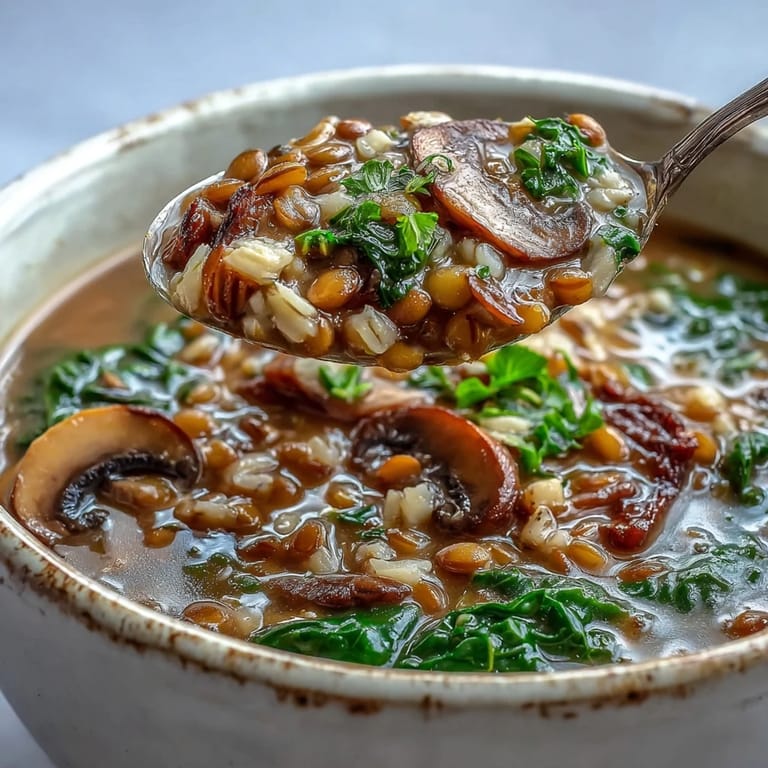
Save There's something about a pot of lentil soup that makes a kitchen feel less like a room and more like a sanctuary. My neighbor stopped by one October afternoon, and the aroma of caramelizing mushrooms and simmering barley drew her straight to the stove before she even said hello. That's when I realized this soup—layered with red and brown lentils, chewy barley, and earthy mushrooms—had become the dish I make when I want people to feel truly welcomed. It's simple enough to throw together on a busy weeknight, yet substantial enough to make you feel like you've done something meaningful.
I made this for my roommate during a particularly rough week, and watching her eat three bowls straight told me everything I needed to know. The barley had this perfect chewiness, the greens added a peppery note that brightened everything, and somehow it tasted even better the next day. She asked for the recipe, and I realized I'd been guarding it like a secret when really it should be shared.
Ingredients
- Red lentils: These dissolve into the broth and create a subtle creamy texture without any cream—rinse them well or they'll cloud the soup slightly, which honestly doesn't hurt but isn't as pretty.
- Brown lentils: Unlike their red cousins, these keep their shape and add little bursts of earthiness throughout; they're the textural anchor of the whole thing.
- Pearl barley: The secret weapon that makes this feel like real food—chewy, satisfying, and it soaks up all the flavors around it.
- Olive oil: Two tablespoons seems modest, but it's enough to build a proper flavor foundation when you're sautéing the vegetables.
- Yellow onion: One large one gives you sweetness as it softens, which balances the earthiness of the mushrooms and greens later.
- Garlic: Three cloves minced fine—mince them after the onion goes in, or they'll burn and taste bitter instead of warm and fragrant.
- Carrots and celery: This is your holy trinity base; the carrots add sweetness and the celery adds a subtle herbaceous note that ties everything together.
- Cremini or button mushrooms: Let them brown properly in the pan—don't rush this step or they'll steam instead of caramelize, and you'll miss the whole depth they bring.
- Collard greens: These aren't delicate like spinach; they hold up to the long simmer and develop a slightly bitter, peppery quality that balances all the earthiness.
- Vegetable broth: Eight cups is the base; use good quality because the broth is doing most of the flavor work here.
- Dried thyme and smoked paprika: Thyme gives you herbaceous warmth, and smoked paprika adds depth without heat—they work together like old friends.
- Bay leaves: Two of them flavor the whole pot, but remember to fish them out before serving or you'll have an unpleasant surprise.
Tired of Takeout? 🥡
Get 10 meals you can make faster than delivery arrives. Seriously.
One email. No spam. Unsubscribe anytime.
Instructions
- Get the aromatics going:
- Heat your olive oil over medium heat and add the diced onion, letting it soften for about three minutes until it starts turning translucent at the edges. You're building flavor here, not rushing—this is the foundation of the whole soup.
- Build your flavor base:
- Add the minced garlic, carrots, and celery, stirring for another three to four minutes until the kitchen smells like you're doing something proper. The vegetables should be starting to soften but still have a little resistance when you bite one.
- Brown the mushrooms:
- Stir in your sliced mushrooms and let them have their moment—about five minutes, stirring occasionally, until they release their moisture and then start browning on the edges. This is where the soup gets its earthy depth, so don't skip the browning part.
- Combine the dry goods:
- Add both lentils, the barley, thyme, smoked paprika, and bay leaves, stirring everything to coat it in the oil and distribute the seasonings evenly. The lentils and barley are going to absorb all this flavor as they cook.
- Add your liquid:
- Pour in the vegetable broth and water, give it a good stir, and bring it to a boil over medium-high heat. Once it's bubbling, reduce the heat to a simmer—you want gentle, steady bubbles, not an aggressive rolling boil.
- Let it simmer:
- Cover the pot and let it cook for thirty minutes, stirring occasionally so nothing sticks to the bottom. You'll notice the lentils starting to soften and the barley beginning to release its starch, which makes the broth slightly thicker and more luxurious.
- Add the greens:
- After thirty minutes, stir in your chopped collard greens along with salt and pepper to taste, then simmer uncovered for another ten to fifteen minutes. The greens will wilt down significantly and develop a deeper, slightly peppery flavor.
- Taste and finish:
- Give it a final taste and adjust the seasoning—you might want more salt, more pepper, or even a pinch more paprika depending on your broth. Remove the bay leaves before serving.
- Serve with warmth:
- Ladle it into bowls and finish with fresh parsley if you have it, though it's beautiful even without the garnish. Serve it hot with crusty bread for soaking up the last drops.
 Save
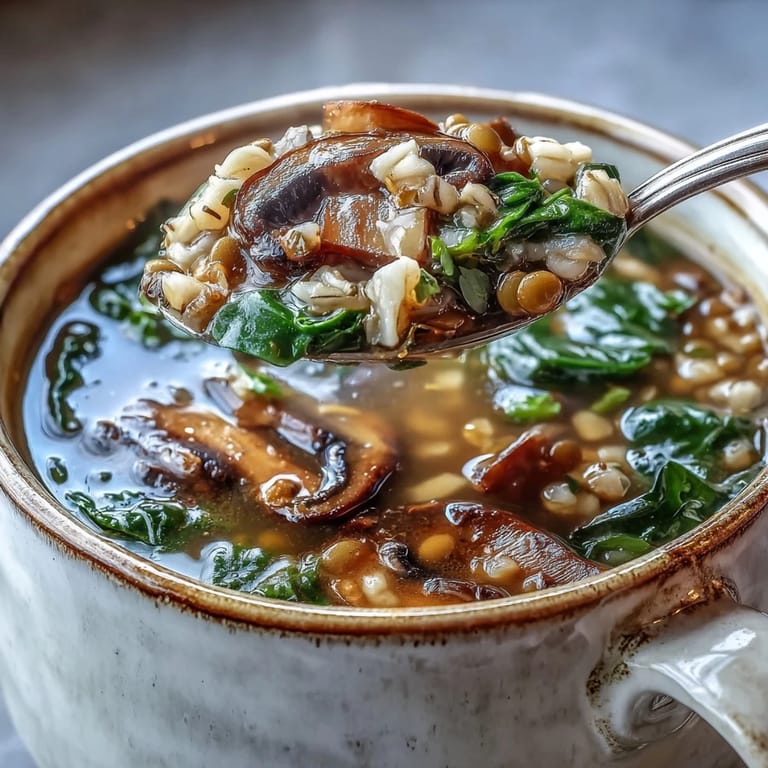
Save A friend who swore she didn't like lentil soup came back for seconds, and when I asked why, she said it didn't taste like obligation—it tasted like someone had actually thought about every component and wanted her to enjoy it. That moment changed how I think about cooking; it's not about impressing people, it's about making something thoughtful enough that it speaks for itself.
Why Double Lentils Make All the Difference
Using both red and brown lentils is the move that separates this soup from being nice to being genuinely craveable. The red lentils are the silent workers—they break down and create this subtle creaminess that coats your mouth without any cream in sight, while the brown lentils stay intact and give you texture, those little pockets of nuttiness that make each spoonful interesting. Together they create something that feels both rustic and refined, substantial but not heavy.
The Barley Question
Pearl barley gets a bad reputation as old-fashioned, but honestly, it's one of the most underrated grains in home cooking. It has this chewy, almost al dente quality even when fully cooked, and it soaks up flavors like nobody's business—every spoonful of broth clings to it, so you're never eating bland grain. If you need gluten-free, short-grain brown rice or quinoa work, but barley really is special here because of how it behaves in long cooking.
Storage, Leftovers, and Last-Minute Thoughts
This soup actually tastes better the next day or even the day after that—the flavors deepen and the barley softens slightly, making each spoonful taste more integrated. Store it in an airtight container in the refrigerator for up to five days, or freeze it in portions for up to three months; just know that if you freeze it, the barley might soften a bit more when thawed, but it's still delicious. Reheat gently over medium heat with a splash of water if it's gotten too thick, and taste for seasoning before serving.
- A squeeze of fresh lemon juice right before eating adds brightness that cuts through all the earthiness beautifully.
- If the soup separates or looks thick after sitting, just add water or more broth and stir—it's forgiving that way.
- This pairs perfectly with crusty sourdough or whole-grain bread, which honestly becomes more important than the soup itself once you start dunking.
 Save
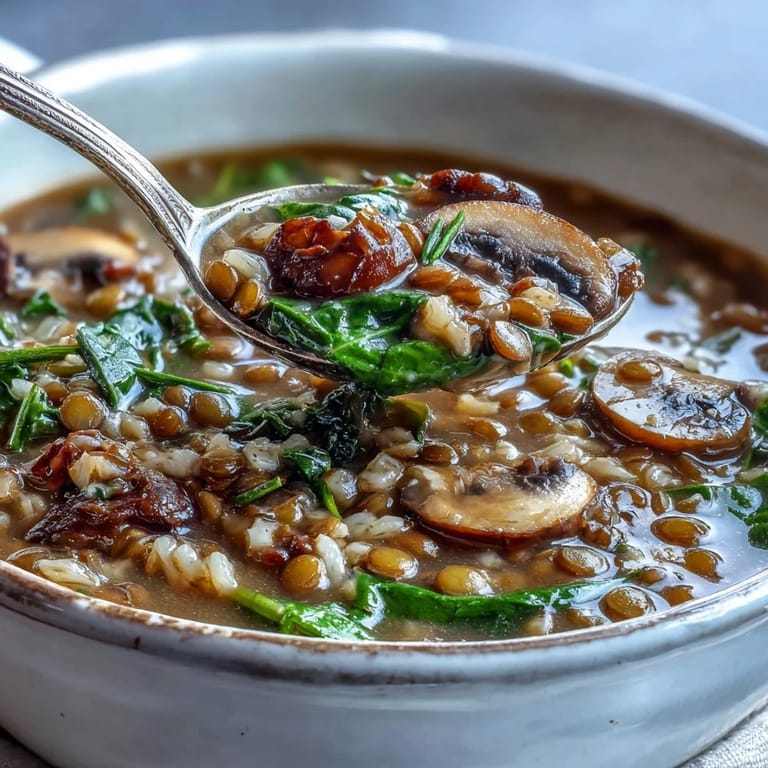
Save This soup has become my answer to almost everything—a rough day, unexpected guests, meal prep for the week, or just wanting to feel like I've made something that matters. It's proof that you don't need fancy techniques or rare ingredients to make people feel genuinely nourished and cared for.
Recipe FAQs
- → Can I substitute the barley with another grain?
Yes, you can substitute barley with short-grain brown rice, quinoa, or farro. For gluten-free options, use certified gluten-free grains and adjust cooking time as needed since different grains have varying cooking times.
- → What other greens can I use instead of collard greens?
Swiss chard, kale, or spinach work wonderfully as alternatives. Add heartier greens like kale or chard at the same time as collards, but if using spinach, add it in the last 5 minutes of cooking to prevent overcooking.
- → How do I store and reheat this soup?
Store cooled soup in an airtight container in the refrigerator for up to 5 days or freeze for up to 3 months. The barley and lentils will absorb liquid over time, so add extra broth or water when reheating on the stovetop or in the microwave.
- → Can I make this soup in a slow cooker?
Absolutely. Sauté the aromatics and mushrooms first, then transfer everything to a slow cooker with the lentils, barley, broth, and seasonings. Cook on low for 6-7 hours or high for 3-4 hours. Add collard greens in the last 30 minutes of cooking.
- → Why use both red and brown lentils?
Red lentils break down during cooking and help thicken the soup, creating a rich, creamy texture, while brown lentils hold their shape and provide hearty texture and bite. This combination offers the best of both worlds for depth and consistency.
- → How can I add more depth of flavor?
Try adding a splash of balsamic vinegar or lemon juice before serving for brightness. You can also sauté tomato paste with the aromatics, add a parmesan rind during simmering (for non-vegan), or finish with a drizzle of quality olive oil.