 Save
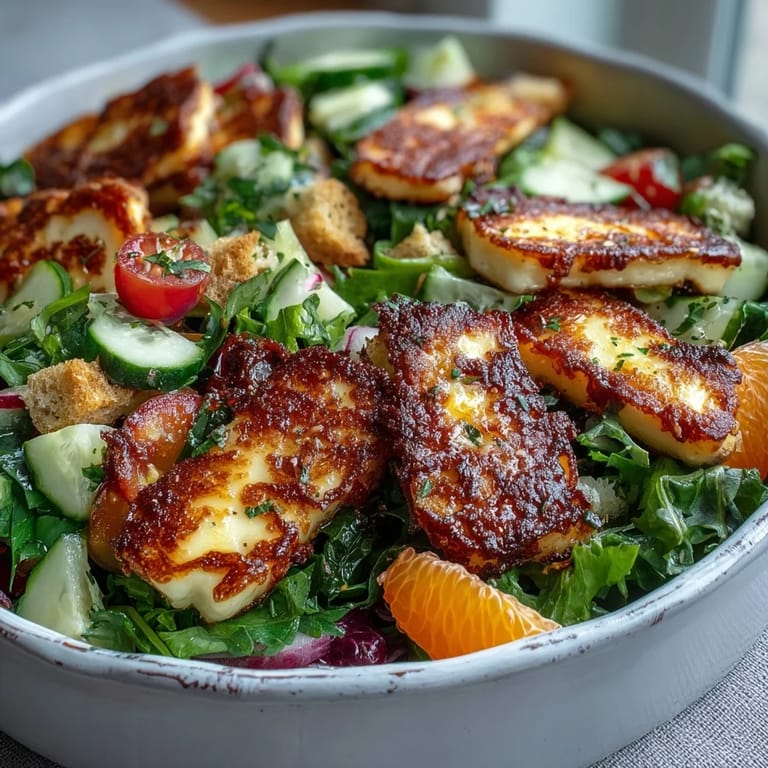
Save There's a moment in late winter when blood oranges arrive at the market with their deep crimson flesh, and I realized I'd been making the same tired salads for months. I grabbed a package on impulse, then wandered past the halloumi and thought: what if I fried it? The combination felt daring in a quiet way, like discovering a shortcut through a familiar neighborhood. That afternoon, the kitchen filled with the smell of golden cheese and bright citrus, and something clicked. This salad became my antidote to gray afternoons and predictable meals.
I made this for my sister on a Sunday when she mentioned feeling uninspired by lunch options, and watching her eyes light up at the first bite was worth every dish I dirtied. She asked for the recipe immediately, then admitted the sumac was new to her—turns out it's become her secret weapon for everything now. That's the thing about introducing someone to a new ingredient; it ripples forward into their cooking forever.
Ingredients
- Halloumi cheese, 200 g sliced 1 cm thick: This is the star that transforms when it hits heat, developing that golden crust while the interior stays gloriously squeaky and soft.
- Blood oranges, 2 peeled and segmented: Their deep color and complex sweetness make regular oranges feel one-dimensional once you've tried them, though substitutes work if that's what you have.
- Mixed salad greens, 150 g: Use a combination of romaine, arugula, parsley, and mint to keep the flavor profile bright and interesting rather than safe.
- Cucumber, 1 small diced: This adds hydration and a cool contrast to the warm cheese without overshadowing the other flavors.
- Cherry tomatoes, 8 halved: They burst slightly when you dress the salad, releasing their juice into every bite.
- Red onion, ½ small thinly sliced: The raw bite mellows slightly as it sits in the dressing, adding sharpness without aggression.
- Radishes, 2 thinly sliced: These bring a peppery crunch that echoes the sumac's tartness in a totally different way.
- Sourdough bread, 2 thick slices cut into cubes: The slight tang of sourdough complements the citrus better than neutral bread, and the crust becomes irresistibly crispy in the oven.
- Olive oil for croutons, 2 tbsp: Don't skimp here; good oil makes the difference between soggy bread and genuinely delicious croutons.
- Extra virgin olive oil for dressing, 3 tbsp: Save your best bottle for this; the dressing is where quality really shines through.
- Fresh lemon juice, 1½ tbsp: Squeeze it fresh if you can, as bottled versions taste thin and slightly metallic in comparison.
- Pomegranate molasses, 1 tbsp: This is the ingredient that makes people ask what you did differently; it's tangy, slightly sweet, and impossible to replicate with anything else.
- Sumac, 1 tsp: The citrusy spice that makes this salad sing with that authentic Middle Eastern identity.
- Ground black pepper and sea salt, ¼ tsp each: Fresh grinding of both elevates the entire dressing beyond what pre-ground versions can achieve.
Tired of Takeout? 🥡
Get 10 meals you can make faster than delivery arrives. Seriously.
One email. No spam. Unsubscribe anytime.
Instructions
- Get your croutons golden:
- Preheat the oven to 200°C and toss your sourdough cubes with olive oil and a pinch of sea salt. Spread them on a baking tray in a single layer and bake for 8 to 10 minutes until they're deeply golden and smell incredible, then let them cool on the tray.
- Fry the halloumi until it's golden and squeaky:
- Heat a non-stick skillet over medium heat and fry the halloumi slices for 2 to 3 minutes per side until they develop a gorgeous golden crust. Transfer them to a paper towel to drain briefly, which keeps them from becoming greasy while preserving that crispy exterior.
- Build your salad foundation:
- In a large bowl, combine all your greens, cucumber, cherry tomatoes, red onion, radishes, and blood orange segments. Don't dress it yet; you want to add the warm halloumi and croutons at the last moment to preserve textures.
- Whisk the dressing together:
- In a small bowl, combine the extra virgin olive oil, lemon juice, pomegranate molasses, sumac, black pepper, and salt. Whisk until it's emulsified and the sumac is distributed evenly throughout.
- Bring it all together:
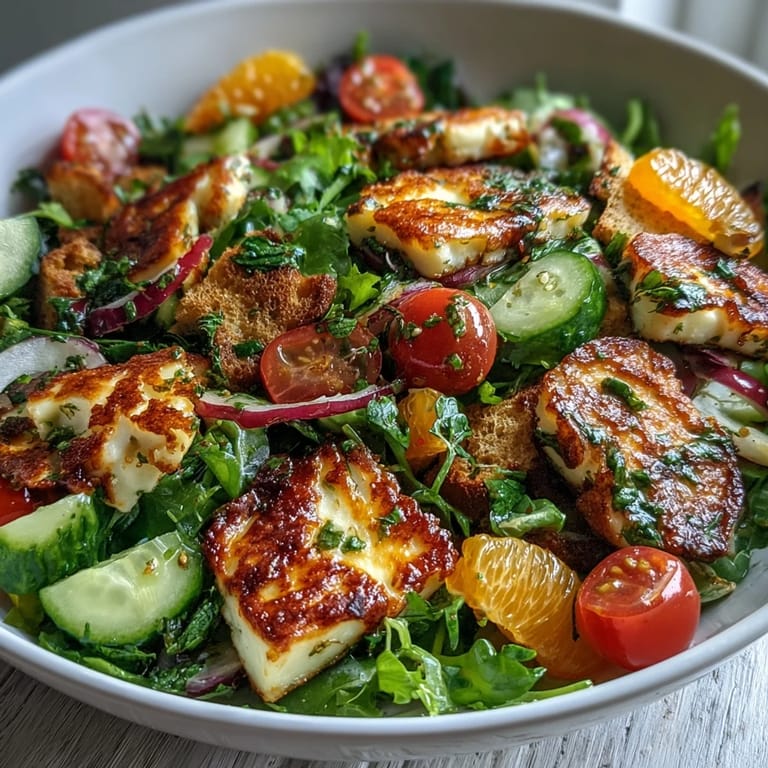
- Add the warm fried halloumi and crispy croutons to the salad bowl, drizzle with the dressing, and toss gently so everything is coated but not crushed. Serve immediately while the halloumi is still warm and the croutons haven't started to soften.
 Save
Save There's something about the contrast of warm and cold, crispy and soft, tangy and fresh all happening at once that makes this salad feel more celebratory than its simplicity would suggest. It's the kind of meal that reminds you why cooking matters in the first place.
Why Sumac Changes Everything
Before I discovered sumac, I thought lemon and vinegar were the only ways to add tartness to a dish. Then I tried it in this salad and realized it brings a lemony brightness without the harshness, almost like the spice itself has been thoughtfully balanced by whoever grows it. It's become my secret weapon for making vegetables taste more interesting, and the subtle fruitiness it adds works beautifully against the richness of fried cheese.
The Blood Orange Swap That Works
If blood oranges aren't available where you are, regular oranges will absolutely work and taste lovely, though you'll miss that deeper color and slightly winey complexity that makes this version special. Pink grapefruit is another beautiful option if you want something even more tart and dramatic, and pomegranate seeds can stand in for the citrus segments if you prefer their jewel-like appearance and juicy burst.
Making This Salad Your Own
The structure of this salad is flexible enough to accommodate what you have in your kitchen while maintaining its essential character. The core is the warm crispy halloumi against cool fresh greens in a sumac dressing, and everything else is an opportunity to improvise based on seasons and preferences.
- Toast some pistachios or walnuts in a dry pan for a few minutes and scatter them over the top for added crunch and a subtle earthiness that complements citrus beautifully.
- Pomegranate seeds make a stunning garnish if you want extra tartness and color, and they add another textural element that keeps the salad from feeling one-dimensional.
- This pairs wonderfully with a crisp white wine like Sauvignon Blanc or a light rosé, which cuts through the richness of the cheese while brightening everything else.
 Save
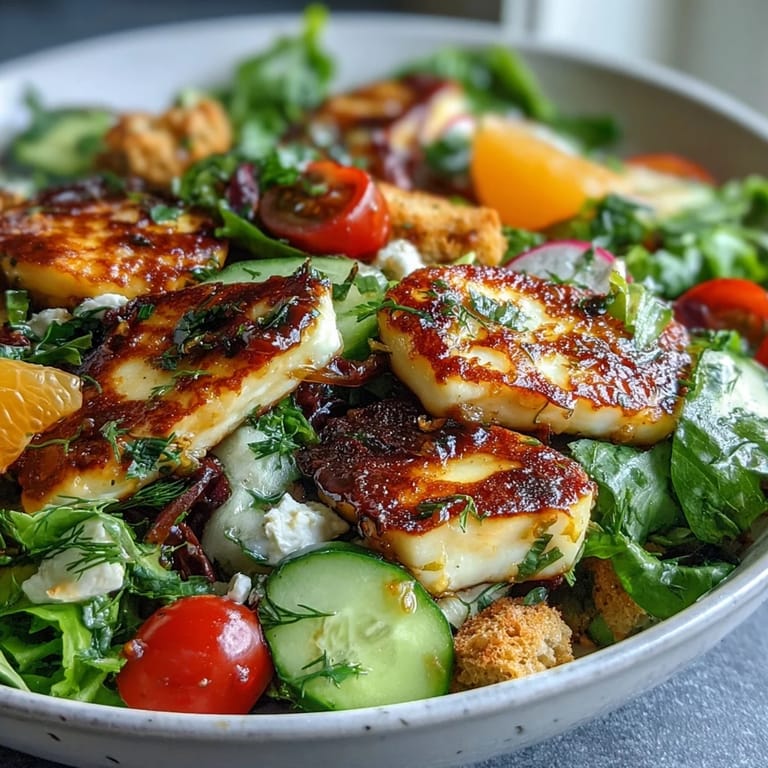
Save This salad taught me that the most impressive meals are often the ones that seem effortless, where each element has been chosen with intention but executed with simplicity. Make it once, and you'll find yourself returning to it again and again.
Recipe FAQs
- → What makes fattoush different from regular salad?
Fattoush is a Middle Eastern salad that traditionally includes crispy fried or toasted bread as a key ingredient. The combination of fresh vegetables with crunchy croutons and tangy sumac dressing creates distinctive textures and flavors that set it apart from standard green salads.
- → Can I prepare the components ahead of time?
You can make the croutons and dressing up to 2 days in advance. Store croutons in an airtight container and keep the dressing refrigerated. However, fry the halloumi just before serving for best results, and toss everything together immediately before eating to maintain the perfect texture contrast.
- → What can I substitute for halloumi?
Paneer or firm feta work well as alternatives, though they won't have the same squeaky texture as halloumi. For a vegan option, try extra-firm tofu slices pan-fried until golden, or use grilled portobello mushrooms for a meaty, savory element.
- → Why is sumac used in this dish?
Sumac is a Middle Eastern spice with a tart, lemony flavor that adds bright acidity without making the dish overly sour. Its deep red color also provides a beautiful visual contrast against the green vegetables and golden halloumi, while enhancing the citrus notes from the blood oranges.
- → How do I prevent the croutons from getting soggy?
Bake the sourdough cubes until thoroughly golden and crisp throughout. Let them cool completely before adding to the salad, and dress the dish just before serving rather than letting it sit. Toss gently to coat the ingredients evenly without crushing the croutons.
- → Can I use regular oranges instead of blood oranges?
Yes, navel oranges or cara cara oranges make excellent substitutes. Blood oranges provide a beautiful ruby color and slightly berry-like flavor, but standard oranges will still deliver sweetness and acidity that balance the salty halloumi beautifully.