 Save
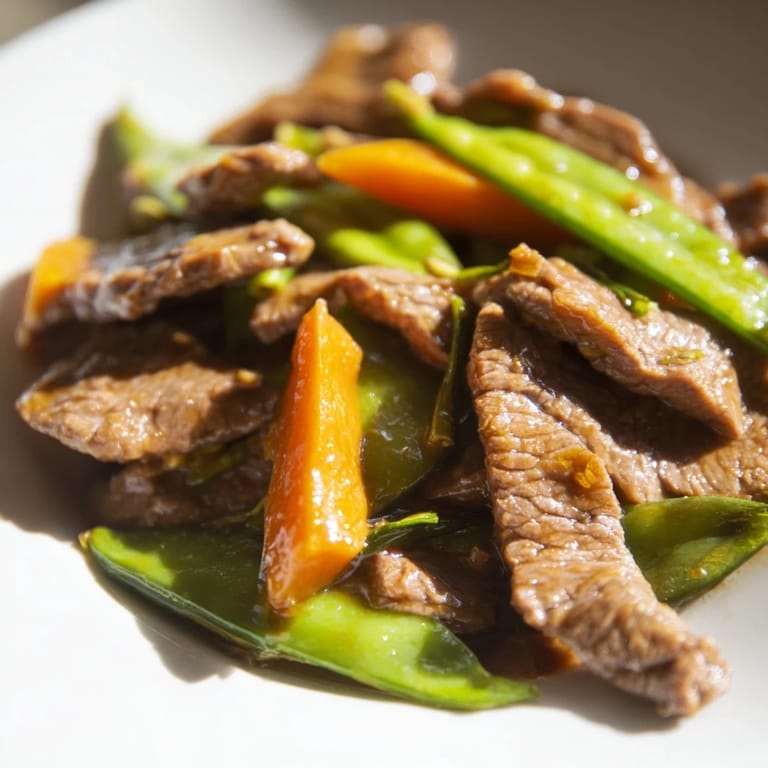
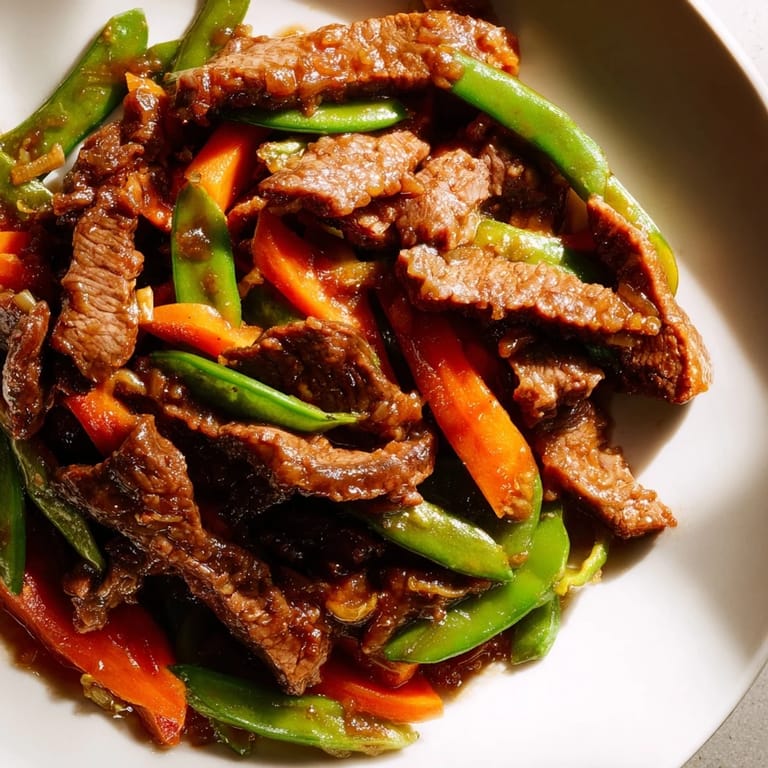
Save The sizzle of that first strip of beef hitting the hot skillet still makes me pause what I'm doing, every single time. I stumbled upon this stir-fry recipe during a particularly busy stretch at work when takeout had become an embarrassing habit. The vibrant colors of the snap peas and carrots against the caramelized beef looked like something from a restaurant kitchen, not my humble stovetop. Yet there it was, ready in less time than delivery would have taken.
Last spring, my sister dropped by unexpectedly just as I was starting to make this. She perched on a barstool watching me slice the beef paper-thin while we caught up, and soon the kitchen filled with that distinctive ginger-garlic aroma that makes everyone hover near the stove. When she took her first bite, her eyes widened with that look that says more than words ever could. Now it's her go-to weeknight dinner too.
Ingredients
- Beef sirloin or flank steak: Freezing the meat for about 20 minutes before slicing makes getting those thin, restaurant-style strips so much easier.
- Snap peas: Look for plump ones without blemishes, and dont skip trimming the ends or youll end up with those annoying strings that get caught in your teeth.
- Fresh ginger: I keep mine in the freezer and grate it while frozen, no peeling required, which changed my stir-fry game completely.
- Oyster sauce: This unassuming bottle is actually the secret weapon, giving that authentic umami depth that homemade stir-fries often miss.
- Cornstarch: Beyond just tenderizing the beef, it creates that silky texture in the sauce that makes everything cling together beautifully.
Tired of Takeout? 🥡
Get 10 meals you can make faster than delivery arrives. Seriously.
One email. No spam. Unsubscribe anytime.
Instructions
- Prep your battle station:
- Before turning on any heat, have everything chopped, sliced, and sauce mixed. Trust me, once that wok is hot, things move faster than you can reach for ingredients.
- Velvet the beef:
- Toss those thin beef slices with cornstarch until they look lightly dusted. This simple step creates that tender, melt-in-your-mouth texture you crave from good stir-fry.
- Sear with space:
- Resist the urge to crowd the pan when cooking the beef. A single layer with room to breathe means browning instead of steaming, and those caramelized edges are everything.
- Vegetable dance:
- Add the carrots first since they take longer, then the snap peas after a minute. The colors will brighten before your eyes as they cook.
- Aromatic magic:
- When you add the ginger, garlic, and white parts of green onions, that fragrant cloud that rises up is your signal that goodness is happening. Inhale deeply, its part of the experience.
- The saucy finale:
- Pour that sauce around the edges of the pan rather than directly on top of everything. It will sizzle dramatically as it hits the hot surface and thicken almost immediately.
 Save
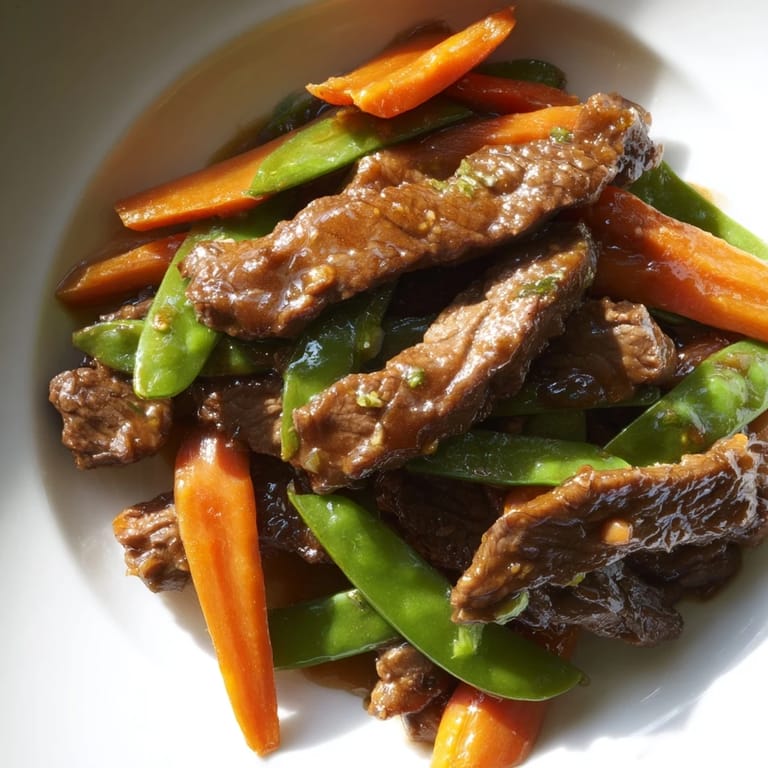
Save My neighbor Tom stopped by one evening just as I was plating this stir-fry, the steam still rising. He had come to borrow some tools but ended up staying for dinner, standing in my kitchen and going back for seconds while telling me about his travels through Asia. There was something about the simplicity of sharing this colorful meal that turned a mundane Tuesday into an impromptu gathering that I still remember vividly.
Making Ahead and Storage
I've learned through several rushed weeknight attempts that this dish rewards a bit of advance planning. Sometimes I prep all the vegetables and mix the sauce the night before, storing everything in separate containers in the fridge. The next evening, I can have dinner on the table in literally 10 minutes, which feels like some kind of kitchen sorcery when youre tired and hungry.
Customizing Your Stir-Fry
After making this recipe probably thirty times, I've played with countless variations. Snow peas work beautifully when snap peas aren't looking their best at the store. Bell peppers add a wonderful sweetness and crunch that complements the beef. Once when I was out of oyster sauce, I substituted hoisin with a splash more vinegar, and while different, it was still delicious in its own right.
Serving Suggestions
While rice is the obvious partner here, I've discovered this stir-fry has more versatility than I initially gave it credit for. One summer evening when it was too hot to cook rice, I served it over chilled cucumber noodles made with my spiralizer, and the contrast of hot and cold was revelatory.
- For a lower-carb option, cauliflower rice soaks up the sauce beautifully without feeling like a compromise.
- A sprinkle of toasted sesame seeds or crushed peanuts adds a textural element that elevates the whole dish.
- Keep some chili oil on the table for those who want to adjust the heat level to their preference.
 Save
Save I hope this stir-fry brings a little joy to your weeknight routine the way it has to mine. Sometimes the simplest meals become the ones we return to again and again, not just for their taste but for the moments of calm they create in our busy lives.
Recipe FAQs
- → What cut of beef works best for this stir-fry?
Beef sirloin or flank steak are ideal choices. Both are tender when sliced thinly against the grain and cook quickly over high heat. The thin slicing ensures even cooking and maximum tenderness in this fast-cooking dish.
- → Can I prepare the ingredients in advance?
Yes, slice the beef and chop all vegetables up to 2 hours ahead. Keep them separate and refrigerated. Mix the sauce components together and store in an airtight container. This prep-ahead approach makes the actual cooking process very quick.
- → How do I prevent the beef from becoming tough?
The cornstarch coating helps seal moisture into the meat. Slice against the grain for shorter muscle fibers, and avoid overcooking by searing quickly at high heat. Remove the beef from the skillet after initial browning and return it only at the end.
- → What can I substitute for snap peas?
Broccoli florets, bell peppers, or snow peas work beautifully. Adjust cooking times slightly depending on vegetable density—harder vegetables like broccoli may need an extra minute. Maintain the balance of tender-crisp texture for best results.
- → How do I make this gluten-free?
Replace soy sauce with tamari, which is typically gluten-free. Verify that your oyster sauce is also gluten-free, as some brands contain wheat. Always read labels carefully, as cross-contamination can occur during manufacturing.
- → What's the best way to thicken the sauce?
The cornstarch coating on the beef naturally thickens the sauce as it cooks. Simmer the mixture for 2-3 minutes while stirring frequently. If you prefer a thicker sauce, mix 1 teaspoon cornstarch with 2 tablespoons water and add it during the final cooking stage.