 Save
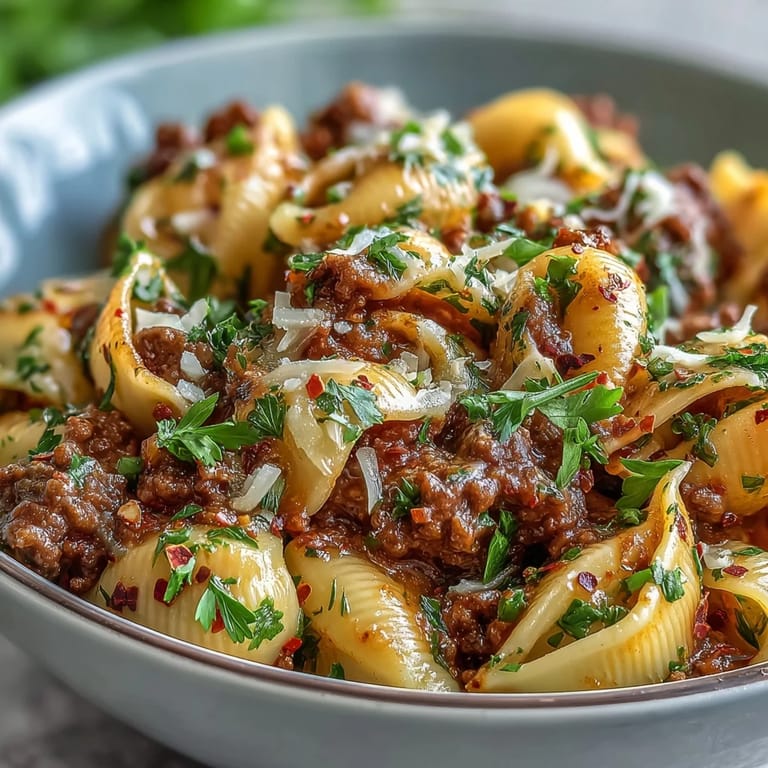
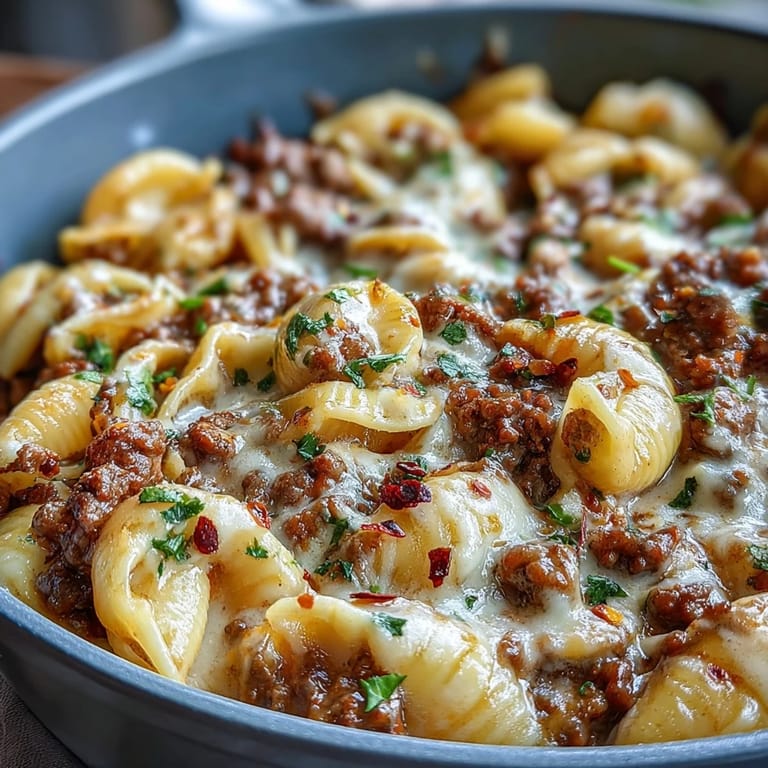
Save There's something deeply satisfying about watching everything come together in a single pot—no mountain of dishes waiting at the sink, just honest comfort food that tastes like someone actually cared enough to make it. I discovered this one-pot beef and shells on a Wednesday night when I was juggling too many things at once, and it became my quiet rebellion against complicated cooking. The pasta absorbs all those beefy, tomatoey flavors as it cooks, then the cream melts in at the end like a warm hug. My family stopped asking what was for dinner and started asking when I was making this again.
I made this for my neighbor Sarah one evening when she mentioned feeling overwhelmed by single-parent dinnertime chaos, and watching her kids actually eat their vegetables—hidden happily in the creamy sauce—without complaint was worth more than any compliment. She called the next day asking for the recipe, and now it's become her Thursday night standard too.
Ingredients
- Ground beef (1 lb, 80/20 blend): The ratio matters here—too lean and you lose that rich, beefy flavor that makes the sauce taste like it simmered for hours instead of half an hour.
- Yellow onion and garlic (1 small onion, 2 cloves): These two are your flavor foundation, so don't rush them; let them get soft and golden before you move on.
- Medium pasta shells (8 oz, uncooked): Shells trap the sauce inside them, creating little pockets of creaminess with every bite—it's the small choice that makes a real difference.
- Beef broth and crushed tomatoes (2 cups broth, 1 can tomatoes): The broth keeps everything savory while the tomatoes add brightness and body without needing fancy ingredients.
- Heavy cream and whole milk (1/2 cup each): The combination is key—cream for richness, milk to keep it from feeling too heavy, striking that perfect balance.
- Cheddar and Parmesan cheeses (1 cup cheddar, 1/2 cup Parmesan): Cheddar melts silky smooth while Parmesan adds a subtle sharpness that keeps the sauce interesting instead of one-note.
- Italian seasoning, paprika, salt, pepper, red pepper flakes (to taste): These seasonings build layers—the herbs are mellow and familiar, while paprika adds warmth and the flakes give a little heat if you're feeling adventurous.
- Fresh parsley (2 tbsp, optional garnish): A small handful of fresh greenery wakes up the whole dish visually and adds a bright, clean note at the end.
Tired of Takeout? 🥡
Get 10 meals you can make faster than delivery arrives. Seriously.
One email. No spam. Unsubscribe anytime.
Instructions
- Brown the beef properly:
- Heat your pot over medium-high and let that ground beef cook without stirring for a minute or two—this creates real browning instead of gray, steamed meat. Break it into small pieces with your spoon and keep going until there's no pink left, then drain off any puddles of grease if it seems excessive.
- Build your flavor base:
- Add the chopped onion and let it soften for a couple minutes until it turns translucent and smells sweet, then add the garlic just long enough for your kitchen to fill with that amazing garlicky aroma. Thirty seconds is all you need—you're not cooking it down, just waking it up.
- Add pasta and liquid together:
- Dump in the uncooked shells along with the broth, tomatoes, and seasonings all at once, stirring so the pasta is mostly submerged and nothing sticks to the bottom. This is where the magic starts—the pasta will cook directly in this liquid and pull in all those flavors.
- Simmer and let the pasta cook:
- Bring everything to a gentle boil, then cover and drop the heat to medium-low, letting it bubble quietly for 12 to 14 minutes. Stir occasionally to make sure nothing's sticking, and you'll watch the pasta soften and the liquid gradually disappear as the shells drink it all in.
- Finish with cream and cheese:
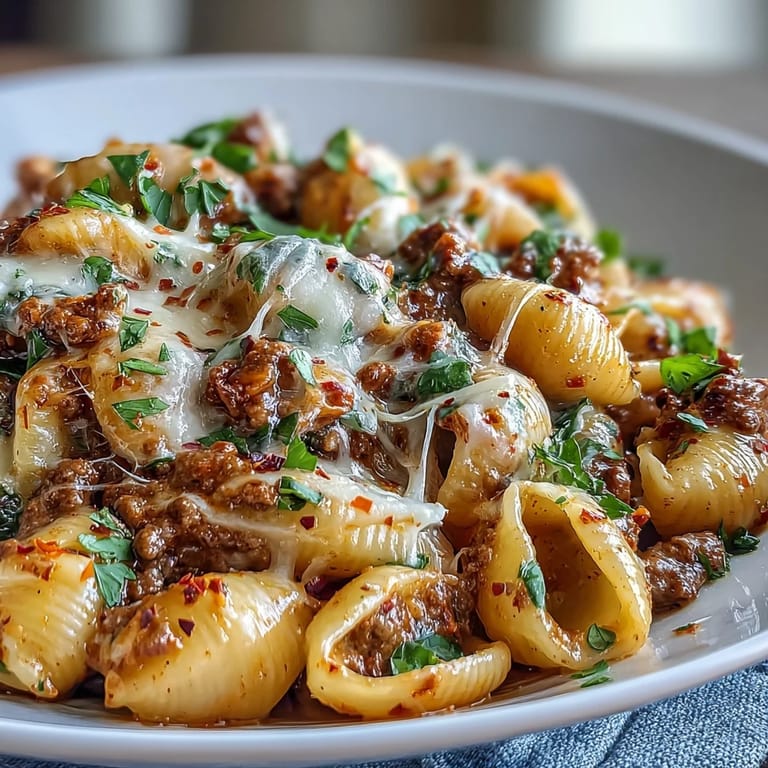
- Pour in the cream and milk, let it warm through for a couple minutes, then add both cheeses in big handfuls and stir until they melt completely into a smooth, silky sauce. Taste it now—this is your moment to adjust the salt, pepper, or heat if you want more of any of it.
- Serve with style:
- A sprinkle of fresh parsley and maybe a tiny pinch of red pepper flakes if you're feeling it, and you've got something that tastes like you spent all afternoon cooking when really you've been done in under 35 minutes.
 Save
Save There was a Sunday afternoon when my teenage daughter asked if she could help make dinner, and instead of handing her a knife, I gave her the wooden spoon and let her stir the pot, watching her face light up as the cream turned the sauce from red to orange-pink, feeling like she'd actually created something. That's when I realized this dish is more than just easy—it's the kind of food that brings people together without making them feel like cooking is a chore.
The Science of One-Pot Pasta
When you cook pasta directly in the sauce, you're not just saving a pot—you're creating a completely different texture because the starch from the pasta gets into the liquid, thickening it naturally instead of leaving you with watery sauce that slides off your shells. The pasta also absorbs all the flavors around it rather than sitting neutral in plain salted water, so every single bite tastes intentional and rich. I used to think one-pot pasta was a shortcut, but now I understand it's actually more flavorful than traditional methods.
Customizing for Your Crew
The beauty of this dish is how it adapts without falling apart—I've made it with ground turkey when someone's eating lighter, stirred in fresh spinach at the end, even added a handful of frozen peas that my partner insisted would ruin it but somehow made it better. If someone at your table can't do dairy, you can play with coconut cream or cashew sauce, though I haven't tested it myself and can't promise the same results. The framework is solid enough that you can be creative without worrying you'll mess it up.
Timing and Make-Ahead Wisdom
This is genuinely best eaten fresh, right after everything comes together, when the sauce is still silky and the pasta hasn't started absorbing liquid and becoming mushy. That said, I've made it on Sunday and reheated it gently throughout the week—just add a splash of milk or broth when you warm it up to loosen the sauce back out. If you're planning ahead, brown the beef and chop your vegetables the night before, and you've cut your actual cooking time down to nothing.
- Store leftovers in an airtight container for up to three days in the refrigerator, and reheat gently on the stove rather than the microwave to keep the sauce smooth.
- Pair this with a bright green salad and crusty bread to soak up every last bit of sauce, which is honestly the best part of the meal.
- Have extra Parmesan and fresh parsley on the table so people can customize their bowls exactly how they like them.
 Save
Save This dish has quietly become my answer to almost every dinner question because it's honest food that tastes like someone cared, comes together fast enough for a weeknight, and leaves you with the kind of satisfied, comfortable feeling that makes you want to do it all over again tomorrow. That's exactly the kind of cooking I want to be doing more of.
Recipe FAQs
- → Can I use different pasta shapes?
Medium shells work perfectly because they catch the creamy sauce in their curves. However, you can substitute with rotini, penne, rigatoni, or macaroni. Adjust cooking time slightly as different shapes may cook at different rates.
- → Is it necessary to drain the beef fat?
If using 80/20 ground beef, draining excess fat after browning helps prevent the final dish from becoming too greasy. For leaner beef like 90/10, draining may not be necessary and the fat adds flavor to the sauce.
- → Can I make this ahead of time?
This dish is best enjoyed fresh, as pasta continues to absorb liquid and may become mushy when reheated. If meal prepping, cook the beef and vegetables in advance, then complete the pasta and sauce components just before serving.
- → How do I store leftovers?
Store cooled leftovers in an airtight container in the refrigerator for up to 3 days. Reheat gently on the stovetop with a splash of milk or broth to restore the creamy consistency. The pasta will have absorbed more liquid, so the texture will be thicker.
- → Can I freeze this dish?
Freezing isn't recommended as dairy-based cream sauces can separate when thawed and reheated. The pasta texture also suffers from freezing. For best results, enjoy fresh or refrigerate for a few days.
- → What can I serve with this?
A simple green salad with vinaigrette balances the richness. Crusty bread or garlic bread is perfect for soaking up the creamy sauce. Steamed broccoli or roasted green beans add color and nutrients without extra effort.