 Save
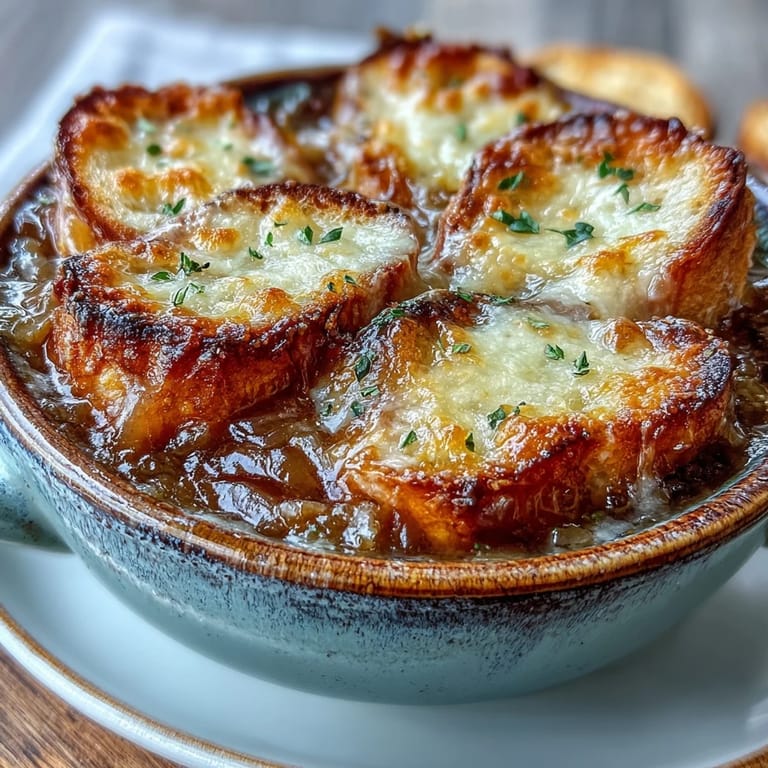
Save There's something about the smell of onions turning golden in butter that makes a kitchen feel like home, even when it's not yours. A friend once invited me over on a cold evening and had this soup simmering on the stove, the aroma hitting me before I even stepped through the door. I realized that night that French onion soup isn't fancy or complicated, but it demands patience and attention, which somehow makes it feel more generous than dishes that come together quickly. The first spoonful—that moment when the cheese stretches and the bread holds everything together—changed how I think about simple, honest cooking.
I made this for a dinner party once and watched my guests go quiet mid-conversation when they tasted it. There was something about the richness of the broth and the way the caramelized onions had become almost sweet that made everyone pause and really taste what was in front of them. That's when I understood that soup like this brings people together not because it's complicated, but because it's undeniably good.
Ingredients
- Yellow onions (4 large, thinly sliced): These are your foundation, and slicing them thin means they'll caramelize more evenly and turn glossy and sweet without burning.
- Leeks (2 large, white and light green parts): They add a subtle sweetness that regular onions alone can't quite achieve, so don't skip them even if they seem like extra work.
- Shallots (3, thinly sliced): These bring a gentle complexity that rounds out the flavor and keeps it from tasting one-note.
- Garlic cloves (3, minced): Add these after the onions soften to prevent burning, which would make the whole soup taste bitter.
- Unsalted butter (3 tablespoons) and olive oil (2 tablespoons): The combination gives you richness from the butter and helps prevent it from browning too fast, while the oil keeps things cooking evenly.
- Beef broth (8 cups, high-quality): Don't use the cheap stuff here, because this soup is mostly broth and onions, so its quality matters enormously.
- Worcestershire sauce (1 tablespoon) and soy sauce (2 teaspoons): These are your secret weapons for depth, adding umami that makes people wonder what you did to make it taste so savory.
- Dry white wine (1/2 cup): This brightens everything and helps you scrape up those precious browned bits from the bottom of the pot.
- Fresh thyme (2 teaspoons, or 1 teaspoon dried): Use fresh if you can, because dried thyme can sometimes taste dusty in a long-simmered soup.
- Bay leaf (1): This flavors the entire pot gently and you must remove it before serving.
- Baguette (1, sliced into 1/2-inch rounds): Day-old bread works better than fresh because it toasts without becoming too soft, and it holds up to the hot soup.
- Gruyère cheese (2 cups, grated): This is the cheese to use, not a substitute, because it melts smoothly and tastes sophisticated without being funky.
- Parmesan cheese (1/2 cup, grated, optional): This adds a sharper note if you want the cheese topping to have more personality.
- Salt and freshly ground black pepper: Taste as you go because the broth and Worcestershire already contain salt, and you don't want to overdo it.
Tired of Takeout? 🥡
Get 10 meals you can make faster than delivery arrives. Seriously.
One email. No spam. Unsubscribe anytime.
Instructions
- Heat your butter and oil gently:
- Use a large, heavy-bottomed pot or Dutch oven because you want heat that distributes evenly and won't create hot spots that burn your alliums. The combination of butter and oil prevents the butter from browning too quickly while you're building flavor.
- Start the long caramelize:
- Add your sliced onions, leeks, and shallots to the warm fat and let them soften over medium heat, stirring often so they cook evenly. This takes 35 to 40 minutes, and yes, it actually takes that long—don't rush it or you'll just have soft onions instead of the deep golden, almost jammy ones you're after.
- Add the garlic at the right moment:
- Once the onions are very soft and caramelized, stir in your minced garlic and cook for just 2 minutes more, until fragrant. If you add garlic too early, it'll turn bitter by the time the onions finish cooking.
- Deglaze and capture the flavor:
- Pour in the white wine and use a wooden spoon to scrape up all those browned bits stuck to the bottom of the pot. These bits, called fond, are pure flavor and they belong in your soup.
- Build the broth base:
- Stir in the beef broth, Worcestershire sauce, soy sauce, thyme, and bay leaf, then bring everything to a gentle simmer. Lower the heat and let it cook uncovered for 30 minutes, stirring occasionally to keep the flavors mixing and melding.
- Season thoughtfully:
- Taste the soup before adding salt and pepper because the broth, Worcestershire, and soy sauce already contribute quite a bit of salt. Remove the bay leaf once you're satisfied with the taste.
- Toast your bread while you wait:
- Preheat your oven broiler and arrange baguette slices on a baking sheet, then toast them under the broiler until they're golden on each side. This takes about 1 to 2 minutes per side, and you want them crispy so they don't dissolve into the hot soup.
- Assemble in bowls:
- Ladle the hot soup into oven-safe bowls, top each with toasted baguette slices, and pile on a generous amount of grated Gruyère. The cheese should cover most of the bread so it melts into the soup.
- Final broil for the cheese:
- Place the bowls under the broiler until the cheese is melted, bubbly, and starting to brown in spots, which takes about 3 to 5 minutes. Watch them so the cheese doesn't burn, and use an oven mitt when you pull them out because the bowls will be incredibly hot.
- Serve immediately:
- This soup is best eaten right away while the cheese is still stretchy and the bread still has a little structure. A garnish of fresh thyme on top makes it feel like you tried even harder than you actually did.
 Save
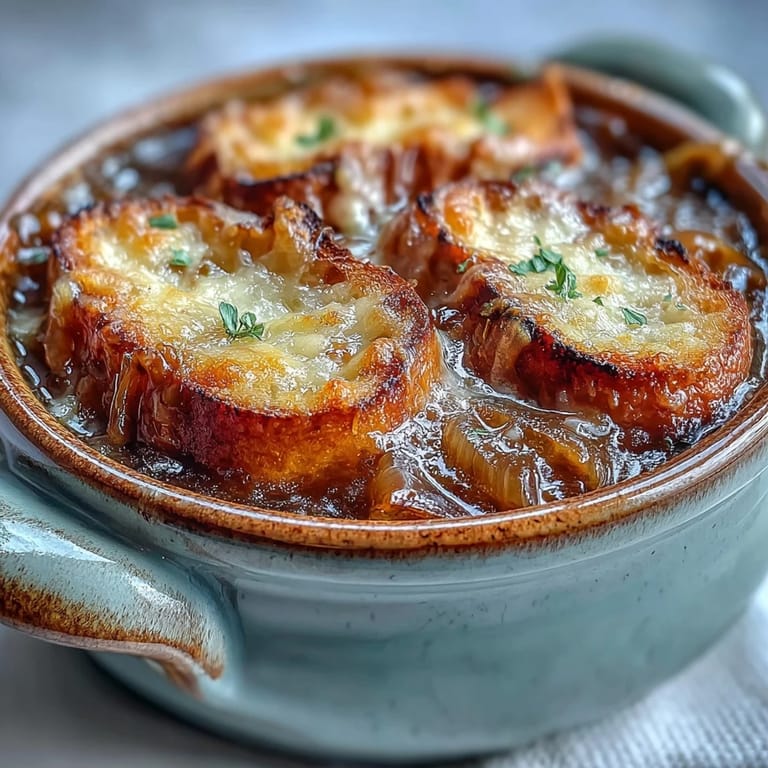
Save I once burned my tongue trying to eat this soup too quickly and spent the next day regretting my impatience, but it was worth it. There's something about a dish that makes you forget caution because it just tastes so good that you can't wait.
The Art of Caramelizing Onions
Caramelization isn't magic, it's chemistry and time working together. The natural sugars in onions slowly break down and turn brown, which concentrates their flavor and creates something that tastes nothing like raw onions. The key is low to medium heat and patience—rushing this with high heat will dry out your onions instead of turning them sweet. I learned this the hard way when I tried to speed through the process and ended up with scorched, bitter results that ruined an entire pot of soup.
Building Umami Depth
Worcestershire sauce and soy sauce aren't traditional French ingredients, but they add a savory depth that makes people wonder what you did differently. These ingredients contain glutamates, which is the same compound found in Parmesan cheese and ripe tomatoes, and it's what makes food taste deeply satisfying. I discovered this trick from a chef who whispered it like a secret, and once I understood the science behind it, I started using umami boosters in almost everything I cook. The soup tastes classically French while tasting better than most French onion soup I've had in actual French restaurants.
Cheese and Bread as Finishing Touches
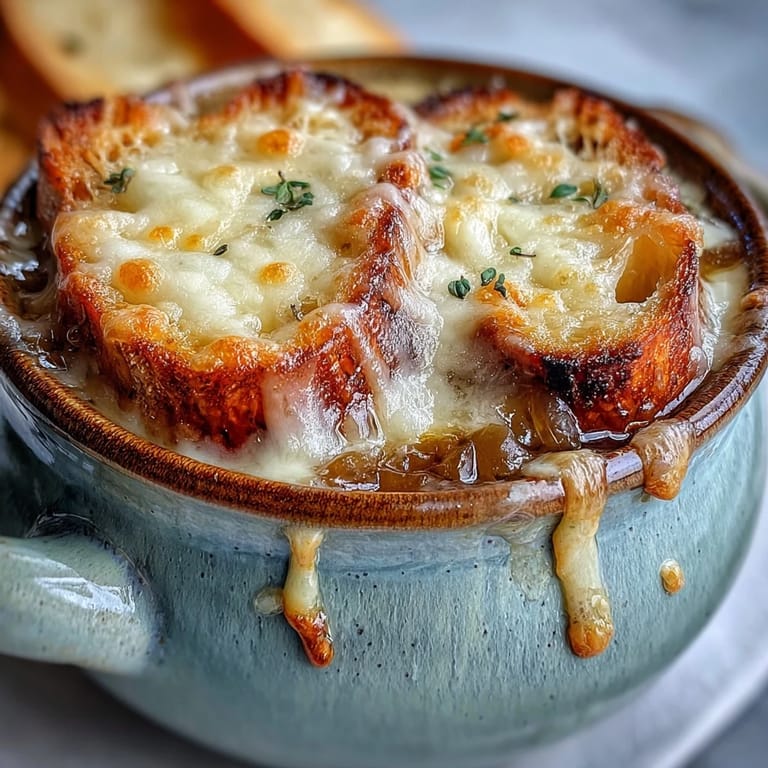
The toasted bread and melted cheese aren't just toppings, they're essential parts of the experience. When you spoon up a bite, you want the bread to hold together just enough to grab a piece of cheese with it, and the melted Gruyère should stretch as you lift the spoon. Using day-old baguette makes an enormous difference because fresh bread becomes soggy too quickly, while older bread stays crispy longer and toasts more evenly. Here's what makes the final assembly work perfectly:
- Toast the bread just before assembling so it stays crisp and doesn't absorb soup moisture too quickly.
- Don't skimp on the cheese because it's what makes each spoonful feel luxurious and complete.
- The broiler step creates those little brown spots on the cheese that taste almost caramelized and add textural interest.
 Save
Save This soup reminds me that the best meals don't need to be complicated, just intentional and made with good ingredients. Serve it with a crisp green salad and a glass of the same white wine you used in the pot, and you'll have a meal that tastes like you spent all day cooking.
Recipe FAQs
- → How long does it take to properly caramelize the onions?
Plan for 35-40 minutes of steady cooking over medium heat, stirring frequently. This patience is essential for developing the deep, sweet flavor and golden-brown color that defines authentic French onion soup.
- → Can I make this soup vegetarian?
Yes, substitute high-quality vegetable broth for beef broth and use a vegetarian Worcestershire sauce alternative. The caramelized onions will still provide rich, deep flavor even without meat-based stock.
- → What cheese works best if I can't find Gruyère?
Swiss or Emmental cheese make excellent substitutes with similar melting properties and nutty flavor profiles. Avoid pre-shredded cheese as it contains anti-caking agents that prevent smooth melting.
- → Do I need oven-safe bowls for this soup?
Yes, oven-safe bowls are essential for the final broiling step where the cheese melts and bubbles on top. Traditional French onion soup crocks work perfectly, but any ceramic or oven-safe pottery bowls will do.
- → Can I prepare components ahead of time?
The soup base can be made up to 3 days in advance and refrigerated. When ready to serve, reheat, ladle into bowls, add bread and cheese, then broil. This actually allows flavors to develop even more deeply.
- → Why add soy sauce to French onion soup?
Soy sauce adds umami depth and enhances the savory qualities of the broth without being detectable as an Asian ingredient. It's a chef's secret for boosting complexity in European dishes.