 Save
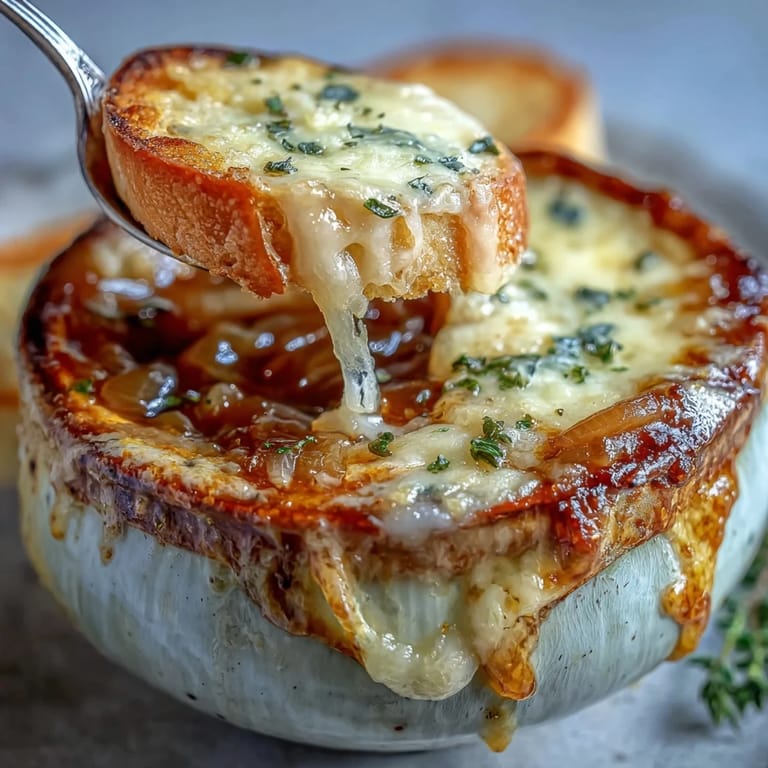
Save There's something about the smell of onions turning golden in butter that makes a kitchen feel like home, even if you've never been there before. My first encounter with proper French onion soup wasn't in Paris but in a tiny bistro tucked behind a bookstore, where the owner insisted the secret was patience and a pinch of sugar. That bowl, crowned with a layer of melted Gruyère that stretched between the spoon and my mouth, taught me that some dishes aren't about technique alone but about giving time the respect it deserves. When I finally made it myself, I understood why this soup has endured for centuries.
I made this for my sister after she'd had a rough day at work, and watching her face light up when that bubbly cheese top came out of the oven—that moment made me realize food really does have healing powers beyond nutrition. She kept going back for more broth, soaking it up with the toasted bread, and we ended up talking until the pot was completely empty. That's when I knew this recipe deserved a permanent spot in my rotation.
Ingredients
- Yellow onions: Three large ones might seem like a lot, but they shrink dramatically as they cook down, concentrating their natural sugars into something almost caramel-like.
- Unsalted butter and olive oil: The combination gives you rich flavor without using stock alone, and the oil helps prevent the butter from burning during that long caramelization.
- Garlic: Just two cloves—you want the onions to be the star, with garlic playing a quiet supporting role.
- Sugar: A teaspoon stirred in halfway through cooking actually speeds up caramelization by helping the natural sugars brown more evenly.
- All-purpose flour: This creates a subtle thickening that gives the soup body without making it feel heavy or starchy.
- Dry white wine: The acidity cuts through the richness and adds complexity that beef stock alone can't quite achieve.
- Beef or vegetable stock: Use whichever matches your diet, though beef stock traditionally gives deeper, richer results.
- Fresh thyme and bay leaf: These herbs infuse the broth with aromatic depth that simmering alone won't accomplish.
- French baguette slices: One inch thick is crucial—too thin and they dissolve into mush, too thick and they stay hard in the middle.
- Gruyère cheese: The nutty, slightly sweet flavor melts beautifully and browns to golden perfection under the broiler.
Tired of Takeout? 🥡
Get 10 meals you can make faster than delivery arrives. Seriously.
One email. No spam. Unsubscribe anytime.
Instructions
- Slice your onions and get the pan hot:
- Cut three large yellow onions into thin, even slices—they don't need to be paper-thin, just consistent so they cook evenly. Heat a large pot or Dutch oven over medium heat with both butter and olive oil together until the butter foams slightly and smells nutty.
- Begin the long, slow caramelization:
- Add all your sliced onions at once and stir them to coat in the fat. They'll look like they fill the pot completely, but trust the process—they release moisture and shrink down within minutes. Stir frequently, especially once they start turning golden, scraping the bottom of the pot where the sweetest, most flavorful bits collect.
- Halfway through, add sugar and salt:
- Around the 17–20 minute mark, when the onions have taken on a light golden hue, sprinkle in the teaspoon of sugar and half a teaspoon of salt. This combination accelerates the browning and brings out deeper caramel notes. Keep stirring as the onions darken from pale gold to amber to deep mahogany—this entire process takes about 35–40 minutes total, and rushing it by turning up the heat will make them bitter instead of sweet.
- Add garlic and bloom the flour:
- Once your onions reach that deep caramel color, add two minced garlic cloves and stir constantly for about a minute until the raw smell disappears. Sprinkle the flour over the top and cook, stirring, for two more minutes—this cooks out the raw flour taste and begins thickening the soup.
- Deglaze with wine and build the broth:
- Pour in the half cup of dry white wine, using a wooden spoon to scrape up all those caramelized bits stuck to the bottom of the pot—that's liquid gold, pure flavor. Once the wine reduces slightly and the alcohol smell fades, pour in your full amount of stock and add the thyme sprigs and bay leaf, then bring everything to a simmer.
- Let it simmer gently:
- Reduce heat to low and let the soup simmer uncovered for 20–25 minutes, just barely bubbling at the edges. This time allows all the flavors to meld and the broth to deepen slightly. Remove the thyme sprigs and bay leaf, then taste and season with the remaining quarter teaspoon of black pepper and any additional salt you prefer.
- Toast the bread while the soup simmers:
- While waiting, preheat your broiler and arrange four slices of French baguette on a baking sheet. Brush both sides lightly with olive oil and slide them under the broiler for about one minute per side until they're golden and crispy on the outside but still slightly tender inside—watch them carefully because they go from perfect to burnt in seconds.
- Assemble and finish under the broiler:
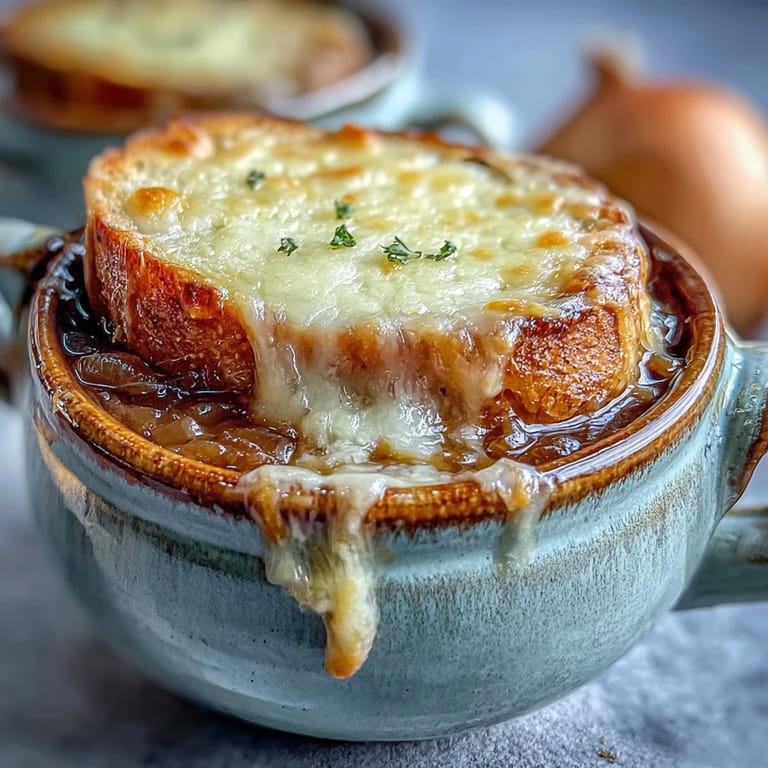
- Ladle your hot soup into oven-safe bowls, top each with one toasted baguette slice, then pile the grated Gruyère generously on top of each bread slice—don't be shy here. Place the bowls on a baking sheet and slide them back under the broiler for 2–3 minutes, watching until the cheese melts completely and the edges turn golden brown and bubbly.
 Save
Save The most memorable version I made was completely unplanned—I had onions going soft in my crisper drawer and stock left over from Sunday dinner, so I threw this together on a Tuesday evening. My roommate came home to that incredible aroma and literally stopped in the doorway, asking what smelled like a fancy restaurant. We ended up postponing dinner plans and just staying in, and somehow that improvised soup tasted better than any intentional effort.
The Magic of Caramelization
Caramelization isn't complicated, but it does require a kind of meditative attention that modern cooking often skips over. As those onions slowly turn from pale cream to gold to deep amber, you're watching sugar molecules reorganize themselves into hundreds of new flavor compounds—it's actual chemistry happening in real time. The longer you let them go, the more complex the flavors become, but there's a fine line between deep caramel and burnt bitterness, so stir regularly and stay present with your pot.
Building Depth with Stock and Wine
The combination of beef or vegetable stock with white wine creates a broth that tastes more interesting than either ingredient alone could achieve. The wine's acidity prevents the soup from feeling one-note and heavy, while the stock provides body and umami depth that makes each spoonful satisfying. If you find the flavor falling flat after simmering, a splash of brandy stirred in at the end can wake everything up without making the soup taste boozy.
Cheese, Bread, and the Perfect Finish
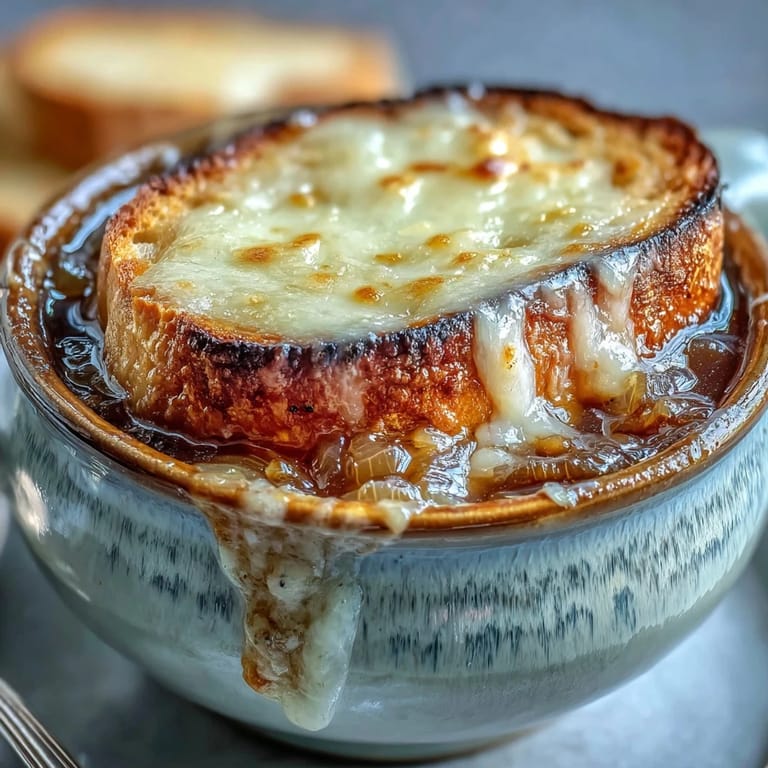
The broiler-finished top is what transforms this from a nice soup into something memorable—that moment when the cheese bubbles and browns, creating a slight crust that contrasts with the melted interior, is when everything comes together. The toasted bread beneath the cheese softens slightly from the heat and soup but keeps enough structure to hold up, creating layers of texture in every bite. This final step is non-negotiable, though you can prepare everything up to this point and finish it just before serving.
- Make sure your bowls are oven-safe ceramic or metal—if you're unsure, transfer the soup to proper broiler-safe dishes rather than risk cracking glass or plastic.
- Don't overload the cheese or it'll take longer to melt evenly, and those outer edges might burn before the center finishes cooking.
- Serve immediately after broiling while everything is still hot and bubbly, using a thick kitchen towel to handle the bowls since they'll be extremely hot.
 Save
Save This soup has a way of becoming comfort food for people regardless of their usual preferences—there's something about deeply caramelized onions in a warm bowl that speaks to everyone. Make it once and you'll understand why it's been a bistro staple for generations.
Recipe FAQs
- → How long does it take to caramelize the onions properly?
Plan for 35-40 minutes of frequent stirring over medium heat. Adding sugar and salt halfway through helps achieve that deep, golden-brown color and sweet flavor essential to authentic French onion soup.
- → Can I use a different cheese instead of Gruyère?
Yes, Emmental or Comté make excellent substitutes with similar melting properties and nutty flavors. For best results, choose a cheese that melts well and browns beautifully under the broiler.
- → What type of onions work best for this dish?
Large yellow onions are ideal as they have the perfect balance of sweetness and flavor when caramelized. Avoid red onions as they can become bitter, and white onions lack the depth of flavor needed.
- → Do I need oven-safe bowls for serving?
Yes, oven-safe bowls are essential since the soup is broiled with the cheese topping. Traditional French onion soup crocks work perfectly, but any broiler-safe ceramic or stoneware bowls will do.
- → Can I make this soup ahead of time?
Absolutely. Prepare the soup base up to 3 days in advance and refrigerate. When ready to serve, reheat the soup, then add the bread and cheese topping before broiling for that fresh, bubbly finish.
- → What's the purpose of deglazing with white wine?
Deglazing with white wine lifts the flavorful browned bits stuck to the pot bottom, incorporating them into the broth. This adds depth and complexity while the wine's acidity balances the sweetness of caramelized onions.