 Save
Save There's something about autumn that makes me want to roast vegetables until my kitchen smells like caramelized sweetness. Last October, I found myself standing in front of a pile of butternut squashes at the farmer's market, drawn to their deep orange color, and I decided right then to make soup. The first spoonful surprised me—that maple syrup and warm spice combination felt like comfort itself, the kind of dish that makes you pause mid-conversation just to taste it properly.
I made this soup for a dinner party where someone showed up with a terrible cold, and I remember her saying it was the first thing she could actually taste in days. There's something oddly satisfying about feeding people food that physically makes them feel better, and watching her face light up as she got to the bottom of her bowl made me understand why some recipes stick around for years.
Ingredients
- Butternut squash (1 large, about 1.2 kg / 2.5 lbs), peeled, seeded, and cubed: Roasting these pieces transforms them into something almost caramel-like, so don't skip that step or use canned pumpkin as a shortcut.
- Yellow onion (1 medium), chopped: This is your flavor foundation; the sweetness in the onion plays beautifully with the maple syrup later on.
- Garlic (2 cloves), minced: Just enough to whisper in the background without overpowering the delicate squash.
- Vegetable broth (1 liter / 4 cups): Use something you'd actually drink on its own, because it becomes the backbone of your soup.
- Water (250 ml / 1 cup): This thins things out and lets the squash flavor shine through without muddying it.
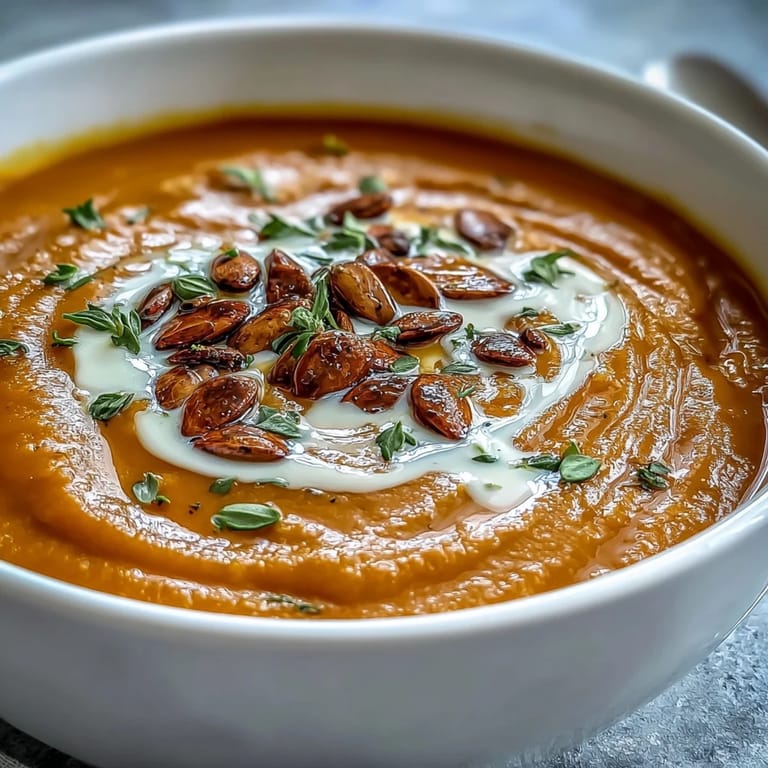
- Coconut milk or heavy cream (120 ml / 1/2 cup): Coconut keeps it vegan and adds a subtle tropical note; cream makes it richer and almost luxurious.
- Pure maple syrup (2 tbsp): Don't use pancake syrup—the real stuff makes all the difference in both flavor and texture.
- Ground nutmeg (1/4 tsp) and ground cinnamon (1/2 tsp): These warm spices are what make people say the soup tastes like autumn in a way they can't quite explain.
- Olive oil (2 tbsp total): One tablespoon for roasting, one for sautéing; it keeps things simple and lets other flavors lead.
- Salt and black pepper, to taste: Taste as you go—you'd be surprised how much seasoning a creamy soup actually needs.
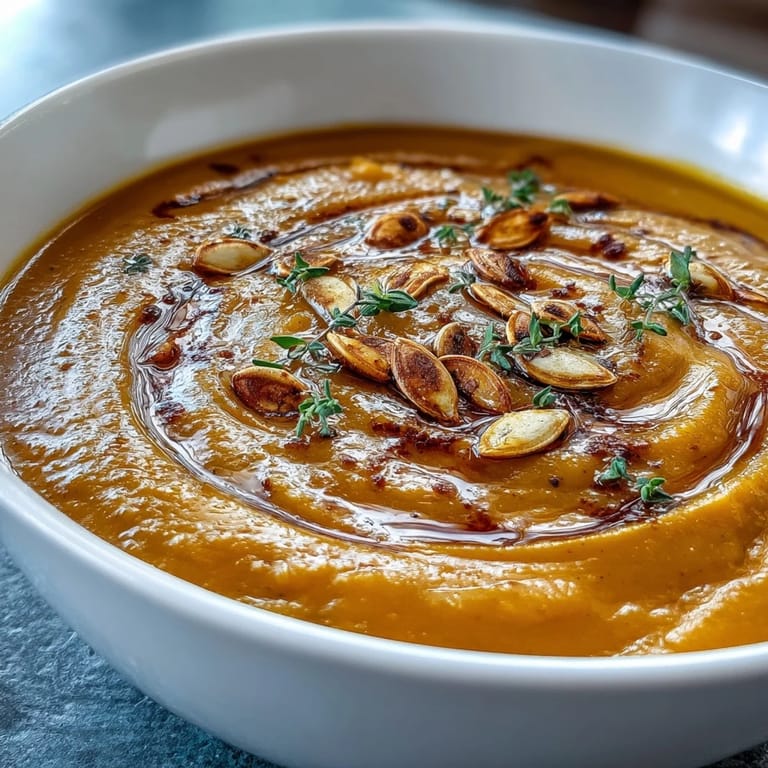
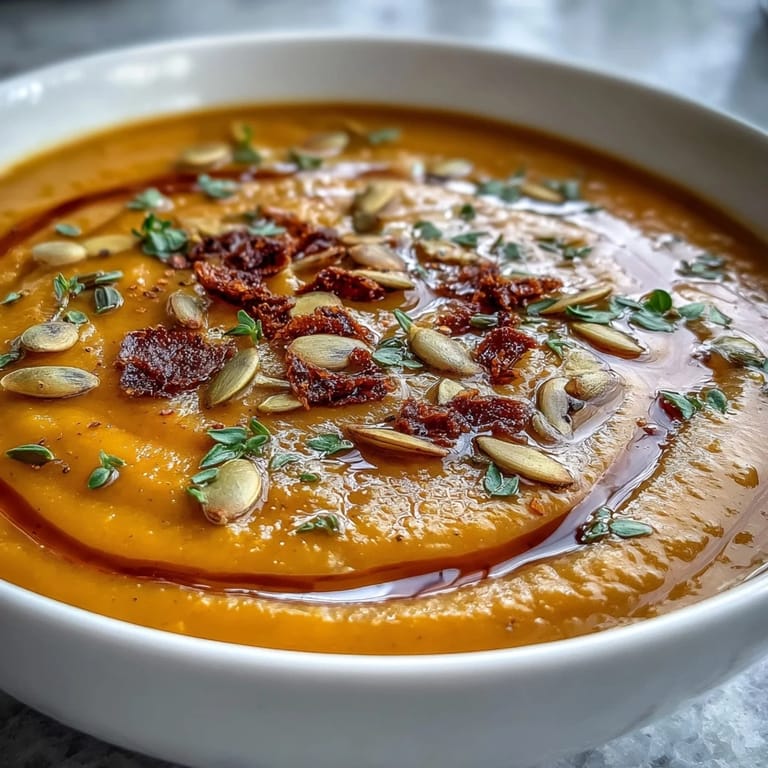
- Optional garnish (toasted pumpkin seeds, maple syrup drizzle, fresh thyme): These aren't extra; they add textural contrast and remind you why the soup tastes so good.
Tired of Takeout? 🥡
Get 10 meals you can make faster than delivery arrives. Seriously.
One email. No spam. Unsubscribe anytime.
Instructions
- Heat your oven and prep the squash:
- Set your oven to 200°C (400°F) and get that baking sheet ready. Toss your cubed squash with a tablespoon of olive oil, a pinch of salt, and pepper, then spread everything out in a single layer.
- Roast until golden and tender:
- Let the squash sit in the oven for 30 to 35 minutes, stirring halfway through so it caramelizes evenly on all sides. You'll know it's done when the edges turn golden-brown and a fork slides through the flesh easily.
- Build your flavor base:
- While the squash roasts, heat a tablespoon of olive oil in a large pot over medium heat. Add your chopped onion and cook it slowly for 4 to 5 minutes until it turns translucent and softens, then add the garlic and let it bloom for about a minute.
- Combine everything:
- Add the roasted squash to the pot along with your vegetable broth, water, maple syrup, nutmeg, and cinnamon. Stir well so the spices distribute evenly throughout.
- Simmer to marry the flavors:
- Bring the pot to a boil, then lower the heat and let it simmer gently for 10 minutes. This quiet time lets all those spices and sweet notes meld together properly.
- Blend until velvety:
- Using an immersion blender, purée the soup directly in the pot until it's completely smooth. If you're using a countertop blender, work in careful batches so hot soup doesn't splash—let it cool slightly first if you're nervous.
- Finish with cream:
- Stir in your coconut milk or heavy cream, then taste and adjust your salt and pepper. Some pots need more seasoning than others depending on how salty your broth is.
- Warm through and serve:
- If the soup has cooled while you were blending, reheat it gently over low heat without letting it bubble aggressively. Ladle it into bowls and top with pumpkin seeds, a small drizzle of maple syrup, and fresh thyme if you've got it.
 Save
Save My friend's five-year-old actually asked for seconds of this soup, which shocked everyone at the table, and that's when I realized this recipe does something special—it tastes indulgent and cozy without any pretense. That moment reminded me that the best recipes aren't complicated; they're just honest and warm.
The Magic of Roasting
Roasting butternut squash is one of those kitchen techniques that feels lazy but is actually sophisticated. The dry heat caramelizes the natural sugars in the squash, creating depth and complexity that you simply cannot achieve by boiling or steaming it. Once you understand this, you'll start roasting vegetables just to see what they become—it's genuinely transformative.
Cream Versus Coconut
I've made this soup both ways, and honestly, they're different creatures. Heavy cream makes it taste almost decadent, like something from a French bistro, while coconut milk keeps things lighter and adds a subtle tropical undertone that people don't immediately identify but somehow makes them happier. Choose based on your mood and dietary needs, knowing that either one will be delicious in completely different ways.
Serving and Storing
This soup is best served warm, the day you make it, but it keeps beautifully in the refrigerator for up to five days and freezes for a couple of months. I like to reheat it gently over low heat or in the microwave in batches, stirring occasionally so it warms evenly. The spices actually deepen as it sits, so leftovers are often better than the first day.
- Serve with crusty bread for soaking up every last spoonful, or pair it with a crisp green salad if you want something lighter.
- Top with toasted pumpkin seeds for textural contrast and a little earthiness that makes people ask what the crunchy thing is.
- Save the maple syrup drizzle for just before serving so it doesn't get absorbed into the soup.
 Save
Save This soup has become my quiet victory in the kitchen—it's simple enough that anyone can make it, but it tastes like you know a secret. Make it once and you'll understand why it shows up in bowls across tables every autumn.
Recipe FAQs
- → Can I make this soup ahead of time?
Yes, this soup stores beautifully in the refrigerator for up to 4 days. Reheat gently on the stovetop, adding a splash of broth if it has thickened. You can also freeze it for up to 3 months in airtight containers.
- → What can I use instead of coconut milk?
Heavy cream creates a rich, luxurious texture, while half-and-half offers a lighter option. For dairy-free alternatives, try cashew cream or oat milk. Each option will slightly alter the flavor profile but maintain the soup's creamy consistency.
- → Do I have to roast the butternut squash?
While not mandatory, roasting intensifies the squash's natural sweetness and adds caramelized depth that makes this soup exceptional. If pressed for time, you can simmer raw squash cubes directly in the broth, though the flavor will be milder.
- → How do I cut butternut squash safely?
Pierce the whole squash with a knife and microwave for 2-3 minutes to soften the skin. Let it cool, then cut off both ends, stand it upright, and carefully slice down the sides to remove the peel. Halve lengthwise, scoop out seeds, and cube the flesh.
- → Can I adjust the sweetness level?
Absolutely. Start with 1 tablespoon of maple syrup and taste before adding more. The squash's natural sweetness varies by season and variety. You can also substitute honey or brown sugar, or omit sweetener entirely for a more savory version.
- → What spices pair well with butternut squash?
Beyond nutmeg and cinnamon, try ginger for brightness, cumin for earthiness, or curry powder for complexity. A pinch of cayenne adds gentle heat, while sage and thyme bring herbaceous notes that complement the squash's natural sweetness beautifully.