 Save
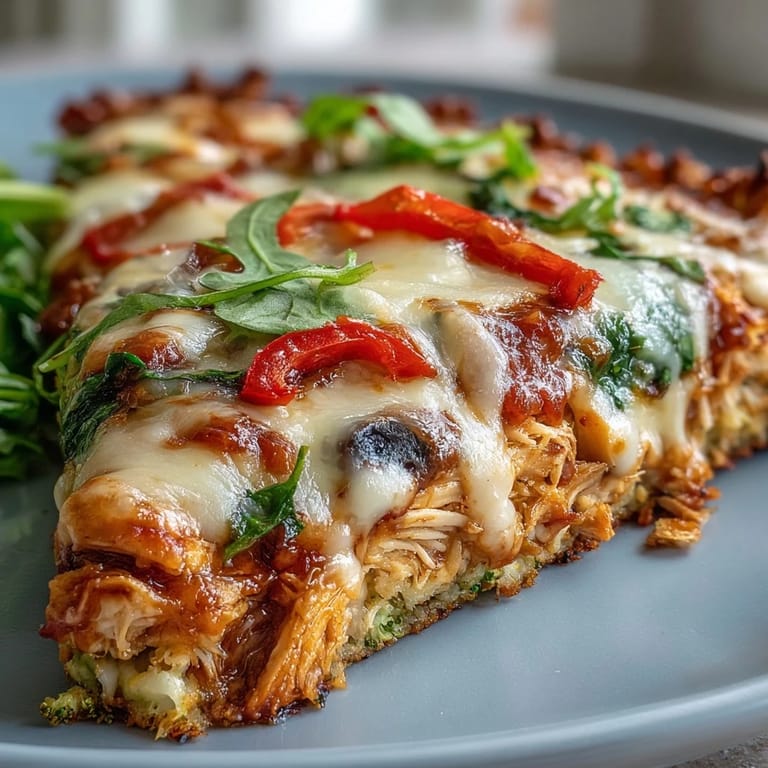
Save My kitchen experiment with low-carb eating hit a wall until I stopped trying to replicate bread and started thinking about what was already in my fridge. One Tuesday evening, staring at leftover roasted broccoli and shredded chicken, I wondered what would happen if I just mixed them together with an egg and cheese. Twenty minutes later, I had a pizza crust that actually held together, tasted nothing like cardboard, and made my skeptical partner ask for seconds. That moment changed how I approached healthy cooking—sometimes the best ideas come from refusing to follow the rules.
I made this for my sister who'd been complaining about missing pizza on her new diet, and watching her face when she bit into it—that moment of surprise when something healthy actually tastes good—was worth every minute of prep. She ate three slices before asking if she could have the leftovers, which felt like winning the lottery in my book.
Ingredients
- Cooked broccoli florets, finely chopped: Use fresh or frozen broccoli that's been steamed until tender, then pulse it in a food processor or chop it by hand until it's almost rice-sized—this creates texture and keeps the crust from becoming dense.
- Cooked chicken breast, finely shredded: Rotisserie chicken works beautifully here and saves time, or poach and shred your own for better control over seasoning.
- Large egg: This binds everything together and adds richness, so don't skip it or substitute it.
- Shredded mozzarella cheese (for crust): Low-moisture mozzarella works best and helps the crust stay crispy rather than soggy.
- Grated Parmesan cheese: This adds a savory depth that mozzarella alone can't achieve, plus it helps with browning.
- Dried oregano and garlic powder: These season the crust itself, so every bite has flavor built in, not just on the surface.
- Salt and black pepper: Taste as you go—the chicken and cheese are already salty, so be gentle.
- Sugar-free tomato sauce or pizza sauce: Any brand works, but I prefer sauce with visible herbs and no added sugar creeping in.
- Shredded mozzarella cheese (for toppings): Get a fresh batch of this for layering, as it melts differently than the crust mozzarella.
- Red onion, bell pepper, cherry tomatoes, black olives: These add color, crunch, and brightness—don't skimp on the variety, as each vegetable brings its own character to the pizza.
- Baby spinach leaves: Spinach wilts dramatically, so pile it on generously and it'll settle into the pizza beautifully.
- Dried Italian herbs and optional fresh basil or chili flakes: The dried herbs go on before baking so they infuse the pizza, while fresh basil and chili flakes are finishing touches that add a last-minute spark.
Tired of Takeout? 🥡
Get 10 meals you can make faster than delivery arrives. Seriously.
One email. No spam. Unsubscribe anytime.
Instructions
- Get your oven ready and prep your workspace:
- Preheat to 425°F and line your baking sheet with parchment paper so the crust won't stick and you can actually slide it off cleanly. Cold parchment paper makes this whole process less stressful than it has any right to be.
- Build the crust base:
- In a large bowl, combine the chopped broccoli, shredded chicken, egg, mozzarella, Parmesan, oregano, garlic powder, salt, and pepper until you have a sticky, cohesive mixture. It should look almost like wet cauliflower rice mixed with shredded cheese, not a smooth dough.
- Shape it into a pizza:
- Transfer the mixture onto your prepared baking sheet and gently shape it into a 12-inch round or oval about half an inch thick, using your hands or the back of a spatula. The edges don't have to be perfect—rustic and uneven actually looks more authentic.
- Pre-bake the crust:
- Bake for 20 minutes until it's firm enough to handle and has turned a light golden brown around the edges. You'll smell that savory, cheesy aroma filling your kitchen, and that's when you know it's working.
- Layer on the sauce and first round of toppings:
- Spread the tomato sauce evenly across the crust, then sprinkle the mozzarella cheese, followed by the onion, bell pepper, cherry tomatoes, olives, and spinach. Don't pile everything in one spot—spread it out so every slice gets balanced toppings.
- Season and finish baking:
- Sprinkle the Italian herbs over everything, then return the pizza to the oven for 8 to 10 minutes until the cheese melts and bubbles slightly. Watch it during this final stretch because ovens vary, and you want melted cheese, not scorched edges.
- Cool and serve:
- Let the pizza rest for a few minutes so the cheese sets slightly and it becomes easier to cut. Garnish with fresh basil or chili flakes if you're feeling fancy, then slice and serve while it's still warm.
 Save
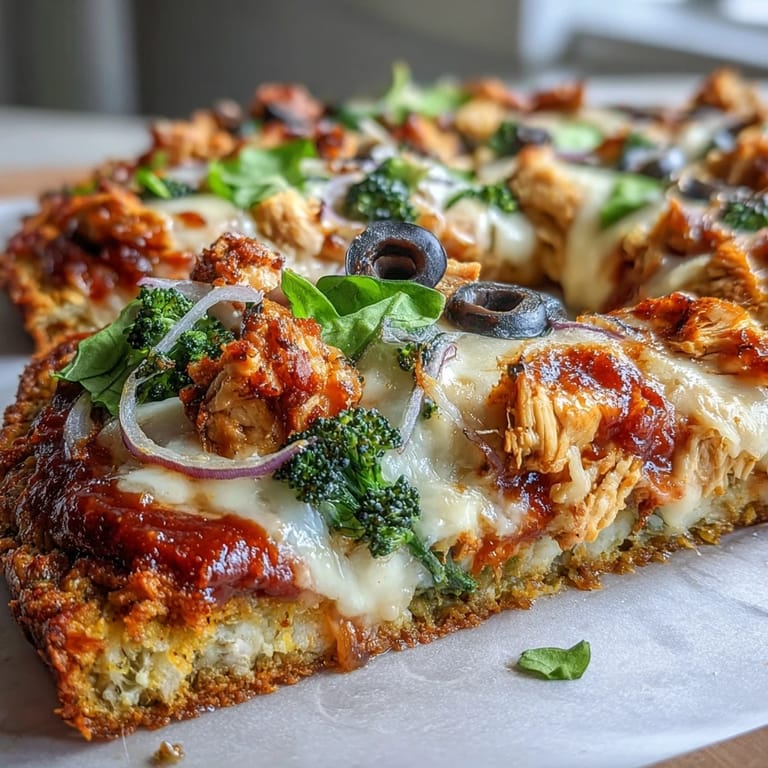
Save There's something almost magical about serving pizza that's actually good for you without tasting like a compromise. When everyone at the table realizes they're eating vegetables and protein and genuinely enjoying themselves, that's when food stops being about restriction and becomes about possibility.
Making This Work for Your Routine
If you're meal prepping or cooking for a busy week, you can make the crust up to a day ahead and store it in the fridge wrapped in foil. Just add a few extra minutes to the final bake since it'll be cold when it goes back in the oven. I've also found that making two crusts at once barely adds effort—they bake side by side, and having one extra pizza ready to reheat is like giving yourself a gift from your past self.
Customizing Toppings Without Losing the Plot
The beauty of this recipe is that your toppings are genuinely flexible, so play around with what you have or what looks good at the market. Mushrooms, artichoke hearts, grilled zucchini, sun-dried tomatoes, or even caramelized onions all work beautifully. The only rule is that you're keeping it low-carb and respecting the crust you worked to build, which means skipping sugary sauces and heavy cream-based toppings that would overpower the delicate vegetable-and-chicken foundation.
Storage, Leftovers, and Second Chances
Leftover pizza keeps in the fridge for up to two days, and honestly, it holds up better than regular pizza because the crust doesn't get soggy the same way bread does. Reheat it in the oven at 350°F for 5 to 8 minutes to restore the crust's texture rather than using the microwave, which will turn it into a chewy mess. If you're feeling creative, leftover pizza pieces make fantastic salad toppers or the base for a quick scramble with eggs the next morning.
- Store covered in an airtight container or wrap each slice individually so it doesn't dry out.
- For a dairy-free version, use vegan mozzarella and skip the Parmesan, though the flavor profile will shift noticeably.
- Frozen pizza also works—bake from frozen and add about 5 extra minutes to the final bake time.
 Save
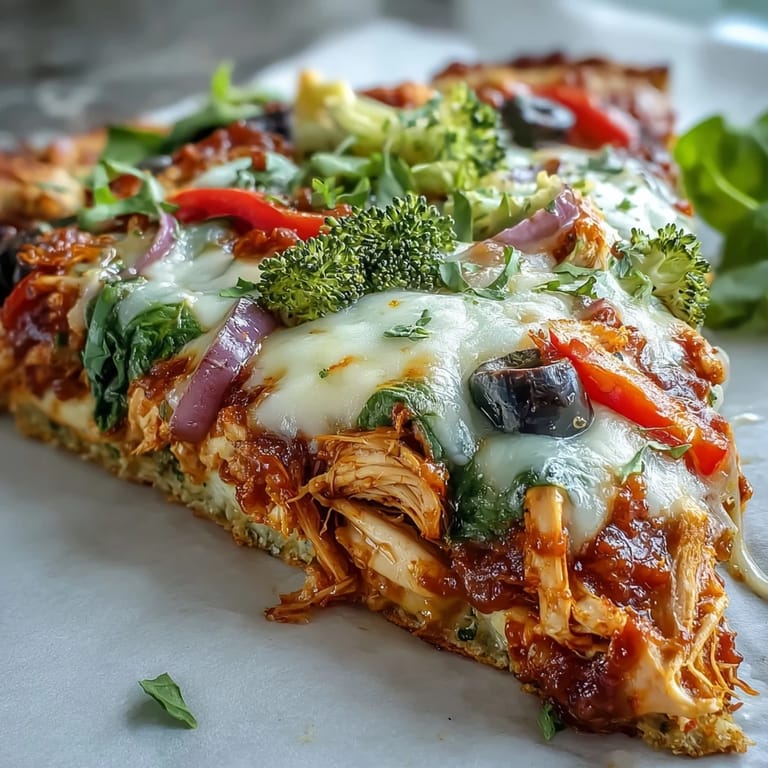
Save This pizza proved to me that eating well doesn't mean eating boring food, and that's a lesson that's stuck with me ever since. Make it once and you'll understand why it's become a regular rotation at my table.
Recipe FAQs
- → Is the broccoli chicken crust sturdy enough to hold toppings?
Yes, the combination of shredded chicken, egg, and cheeses creates a firm, cohesive dough that bakes into a sturdy crust capable supporting all your favorite toppings without getting soggy.
- → Can I make the crust ahead of time?
You can prepare the crust mixture and shape it, then wrap tightly and refrigerate for up to 24 hours before baking. Alternatively, bake the crust completely, cool, and freeze for future use.
- → What vegetables work best as toppings?
Any quick-cooking vegetables work wonderfully. Try mushrooms, artichoke hearts, grilled zucchini, fresh arugula, or roasted eggplant for variety and added nutrition.
- → How should I store and reheat leftovers?
Store in an airtight container in the refrigerator for up to 2 days. Reheat in a 350°F oven for 10-15 minutes to restore the crust's crispiness. Microwaving may make the crust soggy.
- → Can I use frozen broccoli instead of fresh?
Yes, frozen broccoli works well. Thaw completely and squeeze out excess moisture before chopping to prevent the crust from becoming too wet or soft during baking.
- → Is this suitable for meal prep?
Absolutely. The crust holds up well and individual slices can be portioned into containers for easy lunches throughout the week. Reheat in the oven or toaster oven for best results.