 Save
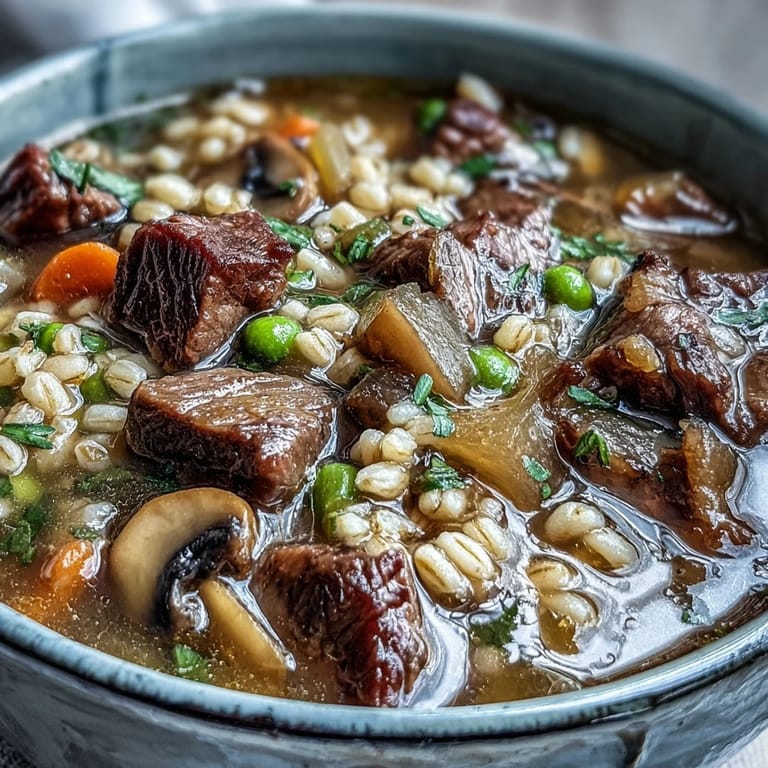
Save My neighbor stopped by one February afternoon when snow was piling up outside, and I had nothing in the house except beef, barley, and whatever vegetables were lurking in the crisper drawer. She sat at the kitchen counter while I threw everything into a pot, and by the time the soup had simmered for an hour, her coat was completely forgotten on the back of the chair. That's when I realized this wasn't just a recipe—it was the kind of dish that makes people want to stay longer than they planned.
I made this soup the first time I was trying to impress someone's family at a casual dinner, and honestly, I was nervous about getting the beef tender enough. But somewhere around the ninety-minute mark, when the kitchen smelled like beef and thyme and something indefinably comforting, I realized the soup had already done the impressing for me. People came back for seconds without even asking what was in it—they just kept eating.
Ingredients
- Beef stew meat (1 lb, cut into 1-inch cubes): The key is not to buy the cheapest cuts—get something with a little marbling so it becomes silky instead of tough.
- Pearl barley (3/4 cup, rinsed): Rinsing removes the starch coating, which keeps the soup from getting gluey and cloudy.
- Carrots (2 medium, peeled and diced): Cut them roughly the same size as your beef cubes so they cook evenly and look intentional in the bowl.
- Celery (2 stalks, diced): This is your flavor anchor—don't skip it even if you think you don't like celery soup.
- Onion (1 large, chopped): Use yellow onion for sweetness; it mellows out as the soup cooks and becomes almost caramel-like.
- Garlic (2 cloves, minced): Add it after the vegetables soften so it doesn't burn and turn bitter.
- Potatoes (1 cup, peeled and diced): These thicken the soup naturally without any cream, making it feel more substantial.
- Mushrooms (1 cup, sliced): They add an earthy depth that makes the soup taste like it simmered for hours even though it didn't.
- Frozen peas (1 cup): These go in at the end to keep their color bright and their texture just slightly firm.
- Diced tomatoes (1 can, 14 oz, drained and optional): Skip these if you want a more traditional beef and barley, but they add a subtle tartness that I find hard to resist.
- Beef broth (8 cups): Use good broth if you can—it's the foundation of everything else.
- Bay leaves (2): These infuse the entire pot with a subtle flavor you can't quite identify but definitely need.
- Dried thyme (1 tsp): Thyme tastes like comfort in dried form, but don't use fresh here because it will disappear.
- Dried parsley (1 tsp): This is mostly for color, but it rounds out the herb profile in a way that feels complete.
- Salt and black pepper: Season conservatively at first—you can always add more but you can't take it back.
- Olive oil (2 tbsp): Use a good one if you have it, but honestly any will do for browning the meat.
Tired of Takeout? 🥡
Get 10 meals you can make faster than delivery arrives. Seriously.
One email. No spam. Unsubscribe anytime.
Instructions
- Get the beef golden:
- Heat the olive oil in a large pot until it shimmers, then add the beef in a single layer—don't crowd the pan. Let each piece sit for about a minute before you move it, so you get that dark brown crust that tastes like caramelization.
- Build your flavor foundation:
- In the same pot without washing it, add the onions, carrots, celery, and mushrooms right into all those browned bits stuck to the bottom. You'll hear them sizzle and soften, and that's when you know the pot is working with you instead of against you.
- Wake up the garlic:
- Stir in the minced garlic and let it cook just long enough to become fragrant—maybe thirty seconds. The moment you smell it, you're done.
- Bring everything together:
- Return the beef to the pot and add the potatoes, barley, tomatoes if you're using them, and all that beef broth. The liquid should come about three-quarters of the way up the pot.
- Low and slow:
- Bring everything to a boil first so you get a good rolling bubble, then drop the heat to low and cover the pot. Stir every fifteen minutes or so, just enough to make sure nothing is sticking to the bottom.
- The final stretch:
- After an hour, add the frozen peas and taste the broth to see if the beef and barley have softened to your liking. If they need more time, give it another twenty minutes. The barley should be creamy and tender, not al dente.
- Finish and serve:
- Fish out the bay leaves, adjust the salt and pepper, and ladle the soup into bowls while it's still steaming.
 Save
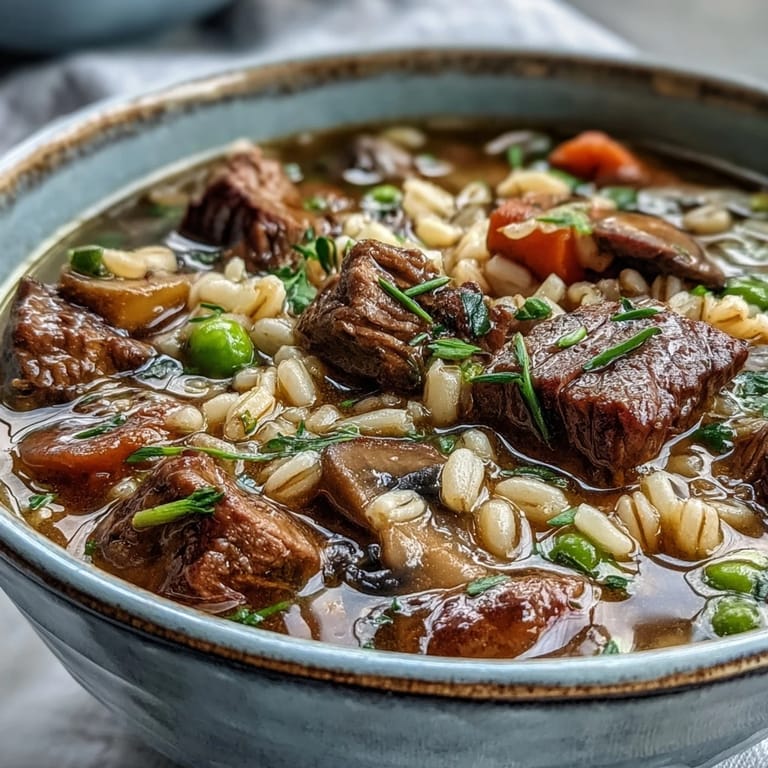
Save My sister made this soup while recovering from surgery, and her kids actually asked for seconds without complaining about the vegetables. That's when I knew this recipe had real staying power—it works for sick days, snow days, and days when you just need something that tastes like someone cares.
The Magic of Beef Browning
The moment I stopped rushing through the browning step and actually gave each piece of beef a minute to sit undisturbed, the entire soup changed character. You're not just cooking the beef—you're creating a flavor base that makes everything else taste deeper and richer. The broth becomes almost mahogany-colored instead of pale, and that color comes straight from those caramelized surfaces.
Barley as Your Secret Weapon
Most people think barley is just filler, but it's actually doing something important in this soup. As it softens, it releases starch that naturally thickens the broth without any cream or flour, and it absorbs the flavors around it while adding a subtle nuttiness. The texture is nothing like rice—it's almost creamy, almost grainy, and completely different every time you make it, which somehow never stops being interesting.
Timing and Flexibility
This soup is forgiving in ways that matter—you can add vegetables earlier or later depending on what you have, swap the peas for green beans, or add a parsnip if you find one. The only thing I wouldn't move is the beef browning at the beginning and the peas at the end. Here's what makes this soup work for almost any occasion:
- Make it the morning of, refrigerate it, and reheat it gently on the stove just before serving.
- Freeze it in portions and thaw overnight in the refrigerator for easy meals on busy weeks.
- Serve it with crusty bread and a simple salad, or let it stand alone as the whole dinner.
 Save
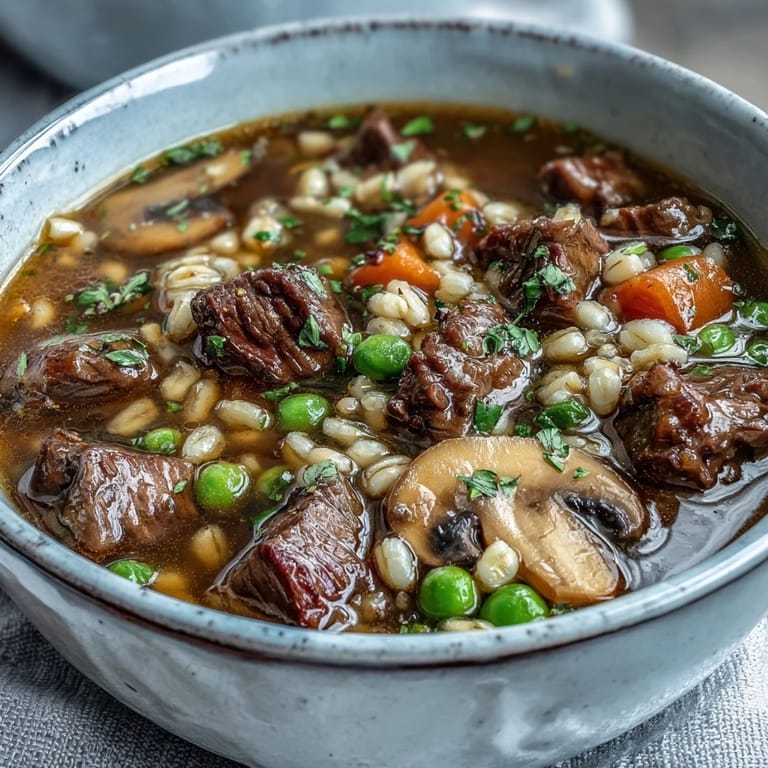
Save This soup became the thing I make when I want to feed people without fussing, and somehow that simplicity is exactly what makes it work. There's no pretense here, just warmth in a bowl.
Recipe FAQs
- → Can I use a different cut of beef?
Yes, chuck roast cut into cubes works wonderfully. You can also use lean beef or ground beef for a lighter version, though cooking time may vary.
- → Is pearl barley necessary or can I substitute it?
Pearl barley adds wonderful texture and heartiness, but you can substitute with farro, wheat berries, or even brown rice. Adjust cooking times accordingly as different grains have different requirements.
- → How can I make this in a slow cooker?
Brown the beef and sauté vegetables first, then transfer everything to a slow cooker. Cook on low for 6-8 hours or high for 3-4 hours. Add peas during the last 30 minutes.
- → Why is my soup too thick?
Barley absorbs liquid as it cooks and continues to do so when stored. Simply add more beef broth or water when reheating to reach your desired consistency.
- → Can I make this soup vegetarian?
Absolutely. Omit the beef and use vegetable broth instead. Add extra mushrooms, beans, or lentils for protein and heartiness. The barley and vegetables still create a satisfying, nourishing bowl.
- → What's the best way to store and reheat leftovers?
Store in airtight containers in the refrigerator for up to 4 days or freeze for up to 3 months. Reheat gently on the stovetop, adding extra broth as the barley will have absorbed liquid during storage.